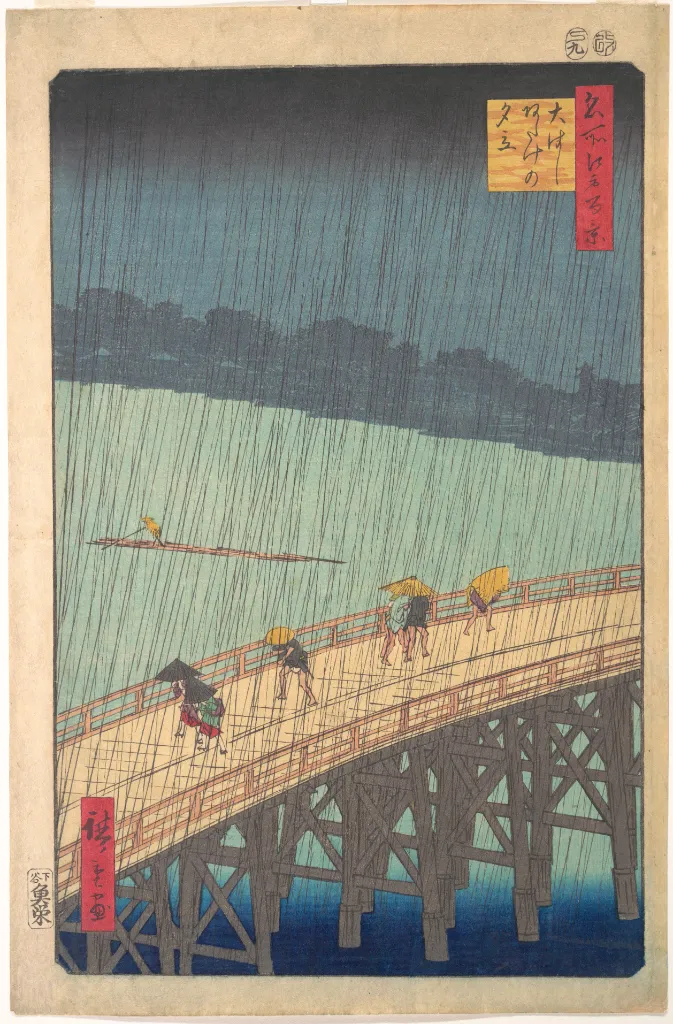
Sudden Shower over Shin-Ōhashi Bridge and Atake (大はしあたけの夕立)
by Utagawa Hiroshige
Description
Utagawa Hiroshige’s Sudden Shower over Shin-Ōhashi Bridge and Atake (大はしあたけの夕立, 1857)—created by one of the ukiyo-e “Three Great Masters”—is among the most atmospheric designs in One Hundred Famous Views of Edo. The print presents a sudden, slanting downpour sweeping across the Sumida River at dusk. Diagonal rain lines slice sharply through the composition, turning the entire scene into a shimmering veil of motion. On the Shin-Ōhashi Bridge, pedestrians hunch forward beneath straw hats and umbrellas, their silhouettes bending with the wind; below, a boatman struggles to steer his vessel against the driving rain. The deep, saturated blues and graduated sky intensify the drama, transforming a fleeting weather event into a poetic study of movement, rhythm, and human vulnerability.
Artistic and Social Context Created in the final years of Hiroshige’s life, the print exemplifies his mature command of mood, color, and meteorological effects. Published by Uoya Eikichi, the Famous Views series represented Edo at its most lyrical and reflective, capturing everyday moments with an emotional subtlety unique among ukiyo-e landscape artists. After the Meiji Restoration brought Japanese prints to Europe, this particular image achieved legendary status: Van Gogh famously made an oil copy of it, captivated by its dynamic rain lines and expressive silhouettes. Its innovative use of perspective, color gradation (bokashi), and weather became a touchstone for Impressionist and Post-Impressionist painters seeking new ways to convey atmosphere.
Interpretation and Meaning Hiroshige transforms an ordinary shower into a meditation on transience. The figures’ synchronized rush across the bridge embodies shared human fragility, while the slanted rain suggests both disruption and the fleeting beauty of impermanence—central to Edo-period aesthetics. The broad river and dimming sky evoke a city in perpetual change, yet the gentle harmony of color and composition imparts a sense of quiet resilience. The scene’s emotional pull lies not in drama but in the subtle tension between nature’s unpredictability and the calm dignity of daily life continuing in spite of it.
Size The original oban woodblock print measures approximately 36.5 × 24.3 cm (14 3⁄8 × 9 9⁄16 inches). Fine impressions are preserved in major collections including the Metropolitan Museum of Art, the British Museum, and the Art Institute of Chicago.