The Death of Caesar (La Mort de César)
by Jean-Léon Gérôme
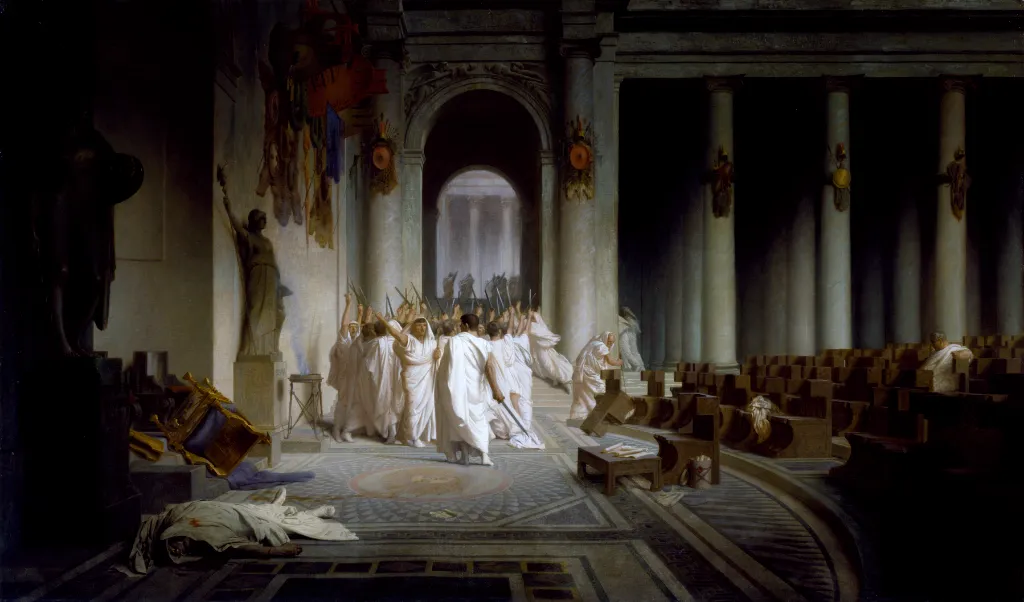
Description
Jean-Léon Gérôme’s The Death of Caesar (La Mort de César, begun 1859, exhibited 1867 in its final large version) is a stark, hyper-realistic oil on canvas that depicts the chilling aftermath of Julius Caesar’s assassination in the Theatre of Pompey on the Ides of March, 44 BC. Caesar lies lifeless on the blood-spattered marble floor at the very foot of Pompey’s colossal statue, his toga pulled over his face in a gesture of ultimate dignity and resignation. The conspirators, led by a resolute Brutus who strides dramatically away with dagger still in hand, are already fleeing into the shadows of the portico. A single empty curule chair and scattered scrolls emphasize the sudden void of power; the vast chamber feels eerily silent after the violence.
Artistic and Social Context
Executed at the height of French academic realism, Gérôme’s painting shocked and fascinated the Paris Salon of 1867 with its archaeological precision (every fold of toga, every architectural detail drawn from Roman sources) and its radical departure from traditional heroic frenzy. Influenced by his travels in Italy and his obsession with historical truth, Gérôme rejected the theatrical chaos of earlier versions (Camuccini, Piloty) in favor of icy stillness and psychological intensity. Instantly reproduced in engravings and photographs, it became the single most recognizable 19th-century image of Caesar’s death, shaping textbooks, illustrations, and later cinema (from Abel Gance to HBO’s Rome) more than any other depiction.
Interpretation and Meaning
By focusing on the moment after the murder rather than the act itself, Gérôme transforms the scene into a meditation on the emptiness of political violence and the loneliness of absolute power. Brutus’s departing figure—back turned, arm raised in a gesture both defiant and haunted—has become the iconic image of the “noble traitor.” The ironic presence of Pompey’s statue towering over the fallen dictator underscores the inexorable cycle of Roman history: today’s victor is tomorrow’s victim. Its cool, almost forensic detachment gives the painting a timeless, almost modern severity.
Size
The principal large version (the one universally reproduced) measures 85.5 × 145.5 cm (33 5/8 × 57 1/4 inches), with several smaller studio variants and a later replica by Gérôme himself. The best-known canvas is in the Walters Art Museum, Baltimore.