Ugolino and Ruggieri (The Divine Comedy—Inferno, Canto 33)
by Salvador Dalí
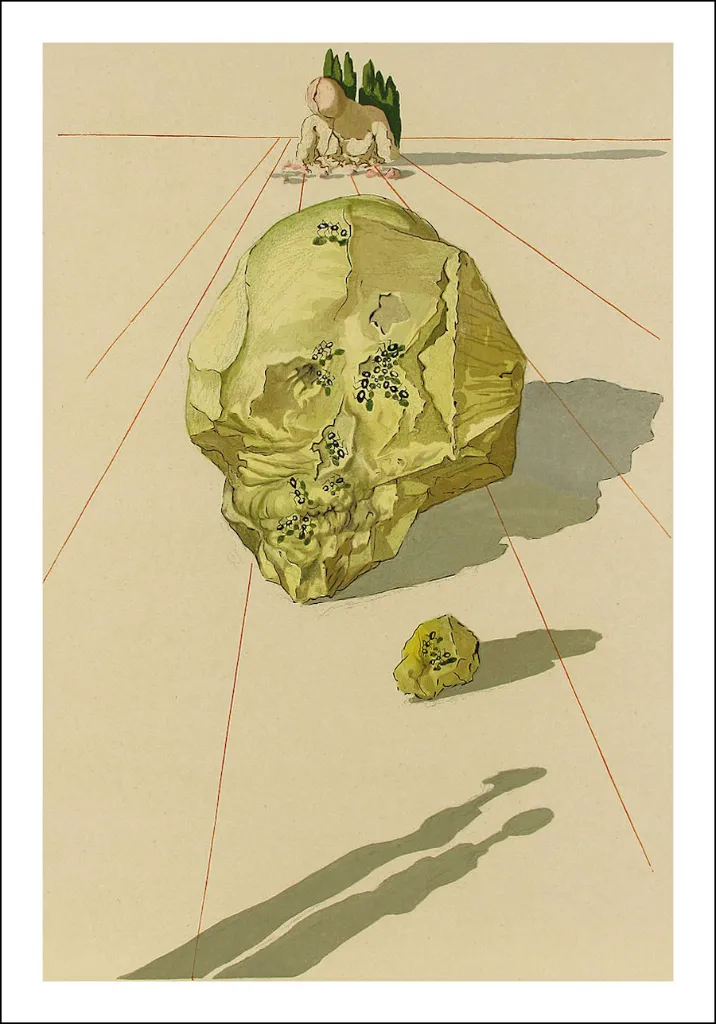
Description
Treachery is the gravest sin in Dante’s moral hierarchy, as it destroys the trust that binds human society, earning the coldest, most isolated torment at Hell’s very center in the frozen lake Cocytus, where Satan himself is imprisoned.
Dalí’s illustration for Treachery presents Count Ugolino eternally gnawing on the skull of Archbishop Ruggieri, his betrayer, in the frozen lake of Cocytus—Hell’s ninth and final circle. Figures are warped and contorted, set amidst a barren, icy expanse that amplifies the horror and chilling isolation of the scene. The twisted agony of Ugolino is rendered through Dalí’s surreal dreamlike style, with stark colors and unsettling anatomy conveying themes of betrayal, vengeance, and endless suffering. The background dissolves into ghostly ice, making this moment one of the most haunting and iconic in Dalí’s Divine Comedy series.
Artistic and Social Context
Created near the end of Dalí’s Divine Comedy project, Ugolino and Ruggieri pushes his Dante cycle toward its bleakest psychological extreme. By staging Count Ugolino locked in an icy hell, eternally gnawing his betrayer’s skull, Dalí fuses medieval theology with modern trauma imagery, turning Dante’s tale of political treachery and starvation into a stark meditation on revenge, dehumanization, and the way historic crimes remain frozen in collective memory.
Interpretation and Meaning
Dalí’s depiction of Ugolino’s punishment accentuates the horror of betrayal—the freezing hell is not just physical, but emotional and existential, and the gnawing act becomes a symbol of unending vengeance and despair.
Size
The print is about 25.5 × 18 cm (10 × 7 in), consistent with other works in Dalí’s Divine Comedy suite.