The Seducers (The Divine Comedy—Inferno, Canto 18)
by Salvador Dalí
Description
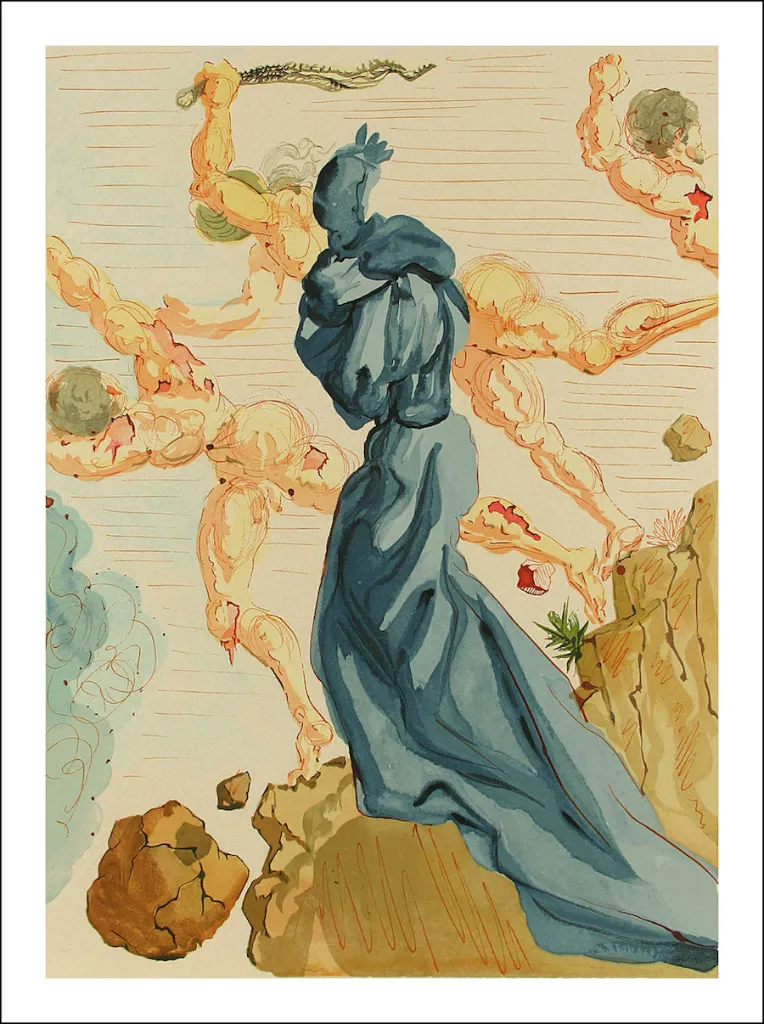
Fraud in Circle 8 is subdivided into ten stone ditches (bolgie), with the first bolgia reserved for panderers (pimps) and seducers—those who exploited or manipulated others for sexual gain, marching endlessly in opposite directions while whipped by horned demons, symbolizing how they drove others toward illicit desire in life.
Dalí’s illustration for the first bolgia of fraud depicts the panderers and seducers in their ceaseless, whipped procession through the rocky ditch of Malebolge—Hell’s eighth circle. Elongated, melting figures march in frantic lines, their bodies distorted and fluid in Dalí’s signature surreal style, while horned demons lash them onward amid a barren, dreamlike landscape of jagged rocks and shadowy forms. The composition evokes relentless motion and chaotic energy, with sinuous limbs and whipping tails blending into a nightmarish parade that captures the degrading, objectifying nature of their sin.
Artistic and Social Context
Created within Dalí’s larger Divine Comedy project, The Seducers translates Dante’s bolgia of panders and seducers into a modern vision of exploitation shaped by surrealism and mid‑twentieth‑century moral anxiety. By stretching marching figures under the lash of demonic overseers in a cavernous, stage‑like space, Dalí fuses medieval allegory with his own interest in desire, manipulation, and guilt, turning this punishment scene into a contemporary meditation on the costs of using others for pleasure or gain.
Interpretation and Meaning
Dalí’s depiction emphasizes the dehumanizing cycle of exploitation—the endless marching reflects how these sinners treated love and trust as commodities, now reduced to perpetual, directionless motion under demonic force, highlighting the perversion of human relationships.
Size
The print is about 25.5 × 18 cm (10 × 7 in), consistent with other works in Dalí’s Divine Comedy suite.