The Irascible (The Divine Comedy—Inferno, Canto 8)
by Salvador Dalí
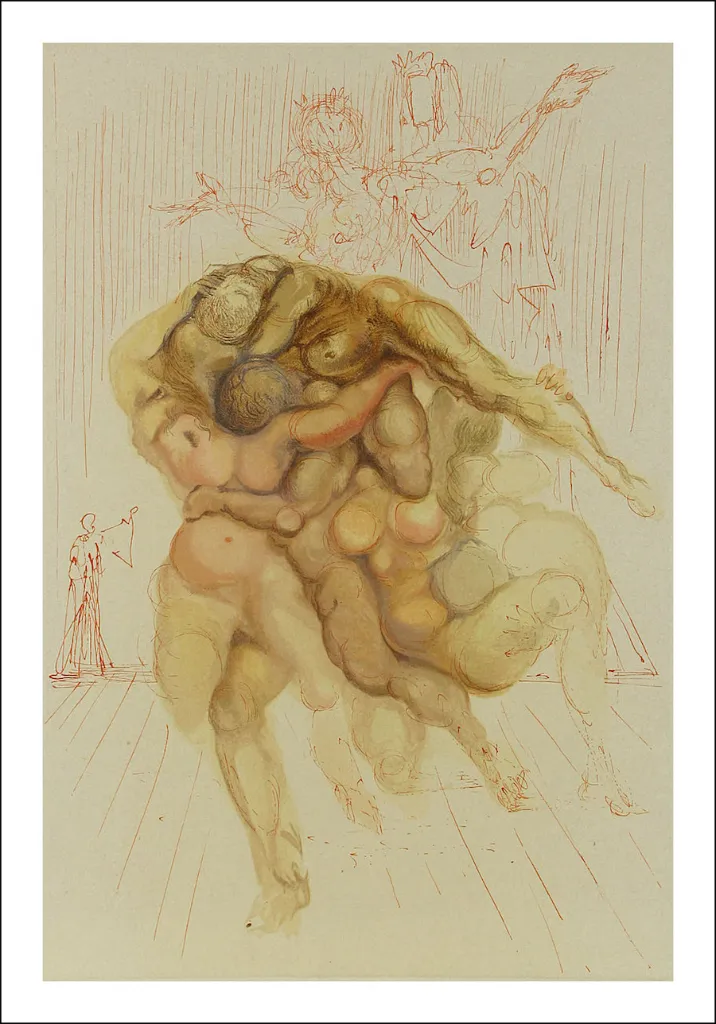
Description
Circle 5 is dedicated to the wrathful (the irascible or angry) and the sullen: the actively wrathful fight eternally on the surface of the muddy, black river Styx, while the sullen (those who repressed their anger in life) lie gurgling and choking beneath the sludge, their punishment reflecting how wrath either explodes outwardly or festers inwardly, both forms of uncontrolled passion.
Dalí’s illustration depicts the furious combatants of the wrathful rising from the fetid swamp, clawing and striking one another amid churning, inky waters—Hell’s fifth circle. Distorted, melting figures splash and grapple in chaotic violence, their elongated limbs and contorted faces rendered in Dalí’s surreal, nightmarish style against a turbulent backdrop of mud and storm, with the sullen barely visible as submerged shadows, conveying the explosive and repressed fury of the sin.
Artistic and Social Context
The Irascible translates Dante’s fifth‑circle river Styx into a modern vision of rage shaped by surrealism and postwar psychology. By casting the wrathful as agitated, distorted figures in a churning, watery landscape, Dalí reworks a medieval moral lesson into an image of explosive, barely contained emotion that speaks to contemporary anxieties about violence, anger, and inner turmoil.
Interpretation and Meaning
Dalí’s depiction captures the self-perpetuating nature of anger—the sinners are trapped in the very mire their rage created, endlessly battling in a filthy, stagnant swamp that mirrors the bitterness and stagnation wrath brings to the soul.
Size
The print is about 25.5 × 18 cm (10 × 7 in), consistent with other works in Dalí’s Divine Comedy suite.