Cerberus (The Divine Comedy—Inferno, Canto 6)
by Salvador Dalí
Description
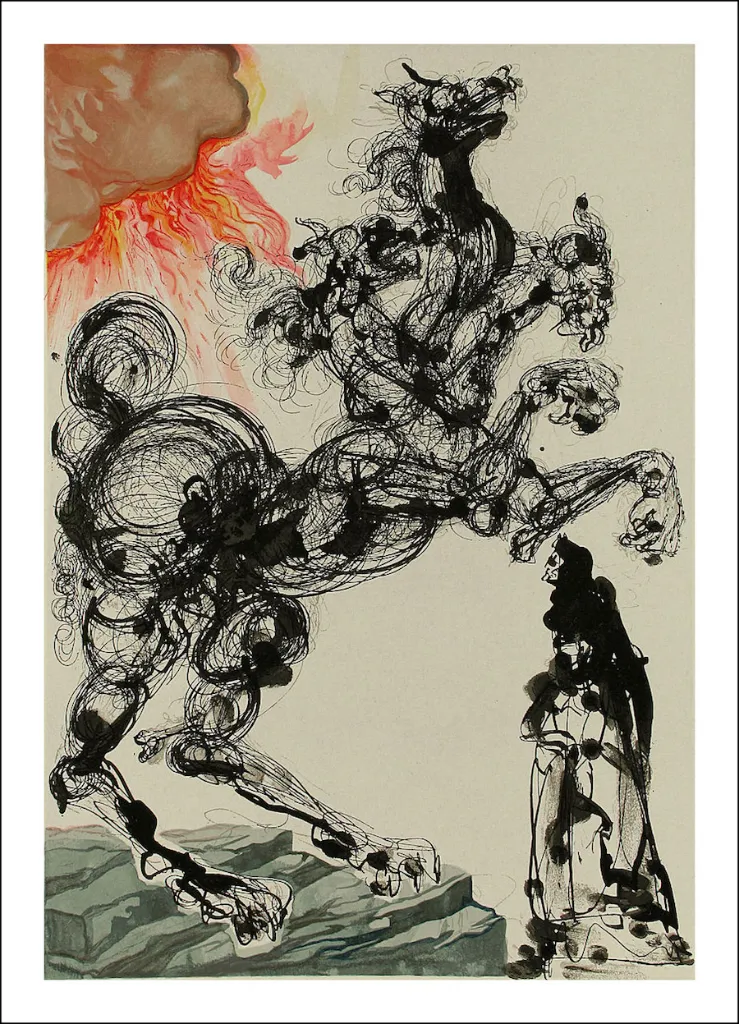
Circle 3 is reserved for the gluttonous—those who made beasts of themselves in life by overindulging in food, drink, and sensual excess. They lie blindly in a vile, freezing slush under an eternal, cursed storm of filthy rain, hail, and snow, tormented by the three-headed monstrous hound Cerberus, who flays and rends them with his claws and teeth, his barking like thunder echoing their mindless, animalistic craving.
Dalí’s illustration presents the monstrous Cerberus, the ravenous three-headed guardian, looming over the prostrate, mud-covered gluttons as he savages them in the torrential downpour—Hell’s third circle. The beast’s heads are warped into grotesque, melting forms with gaping maws and bulging eyes, while the damned writhe helplessly in the stinking mire beneath him, their bodies distorted and semi-liquid in Dalí’s surreal nightmare style, the entire scene drenched in cold, chaotic filth and howling despair.
Artistic and Social Context
In this image Dalí fuses Dante’s monstrous guardian of Gluttony with his own vocabulary of grotesque distortions and psychological unease, transforming the three‑headed hound into a modern emblem of excess and devouring appetite that resonated with postwar anxieties about consumption and moral decay.
Interpretation and Meaning
Dalí’s Cerberus embodies insatiable appetite turned monstrous—the gluttons who lived for consumption are now themselves consumed in a frozen, putrid slush that mirrors the cold emptiness their addiction left in their souls, forever subjected to the very excess they craved.
Size
The print is about 25.5 × 18 cm (10 × 7 in), consistent with other works in Dalí’s Divine Comedy suite.