News of the Limbos (The Divine Comedy—Inferno, Canto 4)
by Salvador Dalí
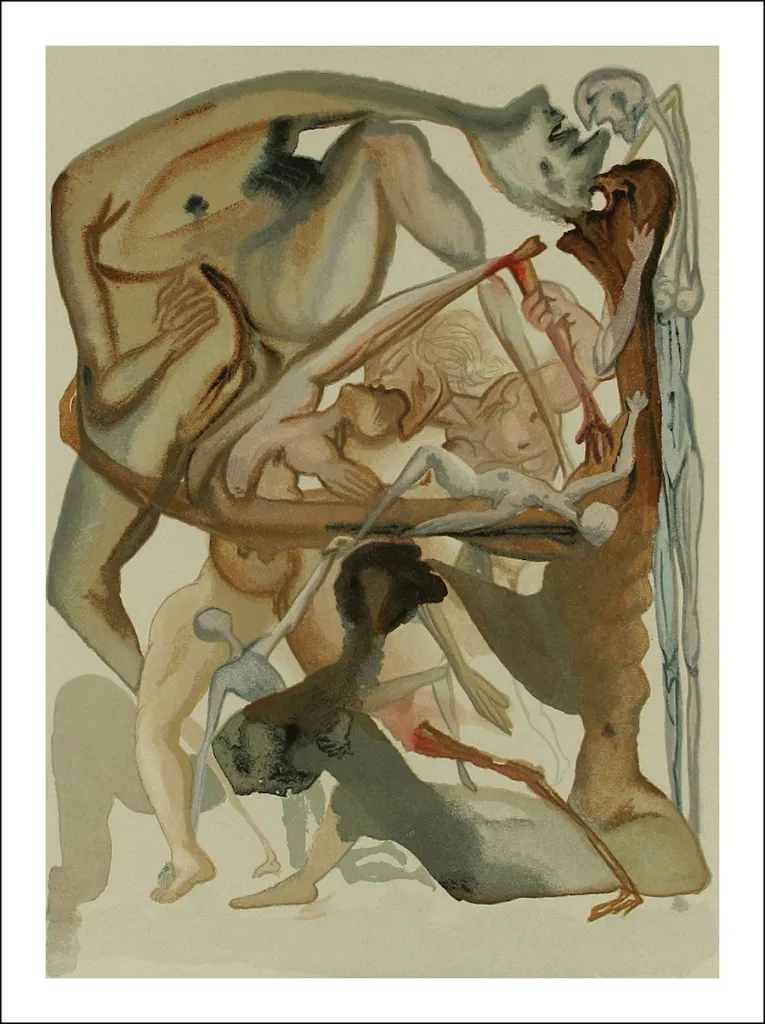
Description
Circle 1, called Limbo, is not a place of active torment but of eternal separation from God’s presence. It houses the virtuous pagans—great poets, philosophers, and heroes of antiquity who lived nobly but before Christ or without baptism—and the unbaptized innocents. They dwell in a noble castle illuminated by the light of human reason, surrounded by a dark hem of sighing sadness, suffering only the pain of unfulfilled desire for the Beatific Vision.
Dalí’s illustration portrays the noble shades of the great poets (Homer, Horace, Ovid, Lucan) and heroes gathered in the misty, dignified gloom of Limbo, with Virgil presenting Dante to these luminous yet sorrowful figures—Hell’s first circle. Ethereal, elongated forms stand or float in a dreamlike, softly lit meadow encircled by shadowy walls and a gentle river, rendered in Dalí’s surreal style with melting outlines and a haunting atmosphere of serene melancholy rather than violent punishment.
Artistic and Social Context
Painted as part of Dalí’s ill‑fated but ultimately completed Divine Comedy project, News of the Limbos grew out of the 1957 commission for Dante’s 700th anniversary, which Italians later rejected on nationalistic grounds in protest of a Spaniard illustrating their poet. Drawing on a long tradition from Virgil to Blake and Doré, Dalí reimagines Dante’s opening descent into Hell through his own Catholic, surreal lens—elongated figures, hushed voids, and a mood of uneasy stillness that turns Limbo into a modern image of spiritual exile and disorientation.
Interpretation and Meaning
Dalí’s depiction captures the unique sorrow of Limbo—the only “pain” is hopeless longing without hope of seeing God—contrasting the fiery torments below while honoring the dignity of pre-Christian virtue, yet underscoring the irreplaceable loss of divine union.
Size
The print is about 25.5 × 18 cm (10 × 7 in), consistent with other works in Dalí’s Divine Comedy suite.