Aristotle with a Bust of Homer
by Rembrandt
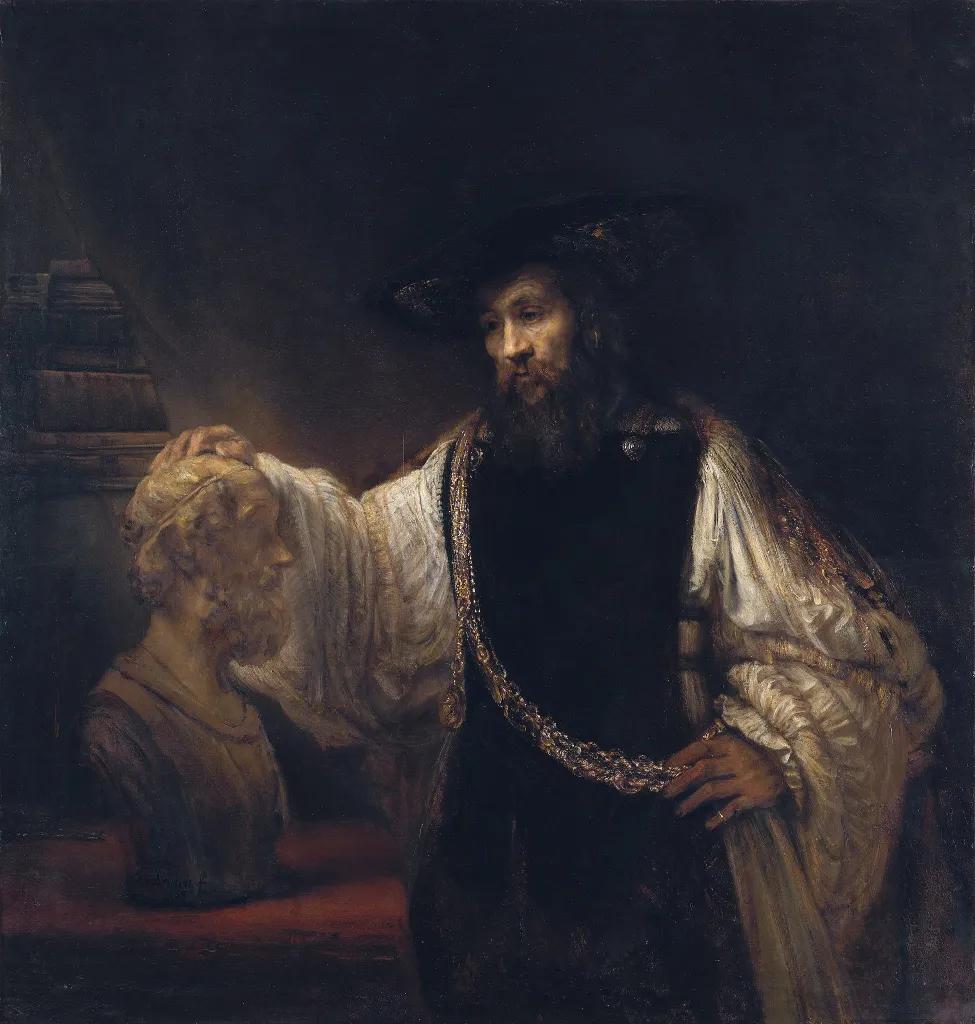
Description
Rembrandt’s Aristotle with a Bust of Homer (1653) is an oil on canvas portrait of Aristotle in dark robes, gazing thoughtfully at a small bust of the blind poet Homer on a table, with a laurel wreath nearby and subtle gold chain glinting. Rembrandt uses rich browns and umbers with soft modeling, creating introspective depth through half-shadows and contemplative pose against a plain background.
Artistic and Social Context
Commissioned in 1653 by Italian merchant Don Antonio Ruffo, Aristotle was painted late in Rembrandt's career amid financial woes, reflecting his deep engagement with classical themes during the Dutch Golden Age's intellectual boom. It arrived in Italy in 1655, later entering the Metropolitan Museum of Art in 1961 for a record $2.3 million. In culture, it's an emblem of Renaissance humanism revived, influencing philosophy portraits in literature like The Name of the Rose and education icons, symbolizing the clash of reason and inspiration in Western thought.
Interpretation and Meaning Aristotle with a Bust of Homer explores legacy: Aristotle's pondering gaze weighs philosophy against poetry, the bust's shadow suggesting epic influence over logic, with the chain as worldly temptation. It reveals Rembrandt's touch—subtle light for inner conflict, pose for reflection—and remains a portrait of intellectual tension and timeless dialogue.
Size
The original painting measures 143 × 136.5 cm (56 1/4 × 53 3/4 inches).