Nighthawks
by Edward Hopper
Description
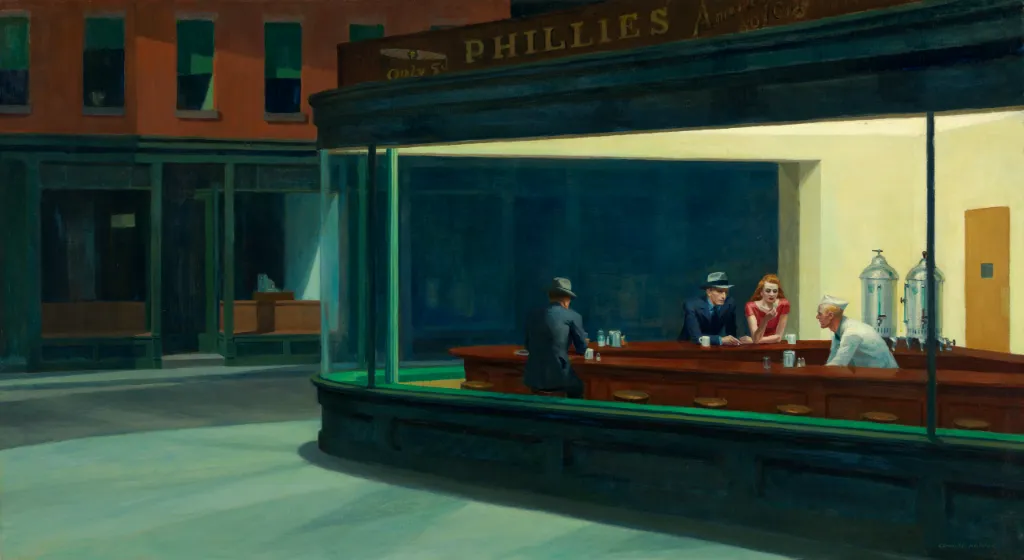
Edward Hopper’s Nighthawks (1942) is an oil on canvas painting showing four people in a brightly lit diner at night: a couple in formal clothes, a man in a suit, and the bartender. The large glass windows expose them to the dark, wet street outside. Hopper uses sharp lines and angles, with cool blues and greens for the exterior and warm yellows inside. The setup highlights urban loneliness through uneven composition and harsh lighting that makes the figures seem isolated. It pulls viewers into a quiet moment at a simple coffee counter, reflecting mid-20th-century American city life.
Artistic and Social Context
Created in 1942 from Hopper’s New York studio, Nighthawks was inspired by a real Greenwich Avenue diner but turned into a general symbol of urban nights. It fits Hopper’s focus on everyday buildings and light effects, similar to his Automat (1927), with the title suggested by his wife Jo. Bought by the Art Institute of Chicago in 1942, it became a key American modernist work during World War II, capturing wartime stress, post-Depression recovery, and the isolation of 24/7 city living. As part of American culture, Nighthawks stands out for embodying the "American Scene" movement—realistic depictions of U.S. daily life that influenced film noir, TV shows like The Simpsons, and ads, making it a shorthand for modern solitude and resilience in pop culture.
Interpretation and Meaning
Nighthawks shows modern loneliness in a single scene: the diner's light against the dark street suggests brief connections in a big city, with the figures' turned heads and stiff poses showing quiet sadness and the limits of closeness. The empty road adds to feelings of watching from afar and being stuck, with the diner's shape like a corner holdout in the night. It highlights Hopper's ideas—light reveals feelings, space shows emptiness—and remains a clear image of American introspection on alone-ness and everyday endurance.
Size
The original painting measures 84.1 × 152.4 cm (33 1/8 × 60 inches).