Gas
by Edward Hopper
Description
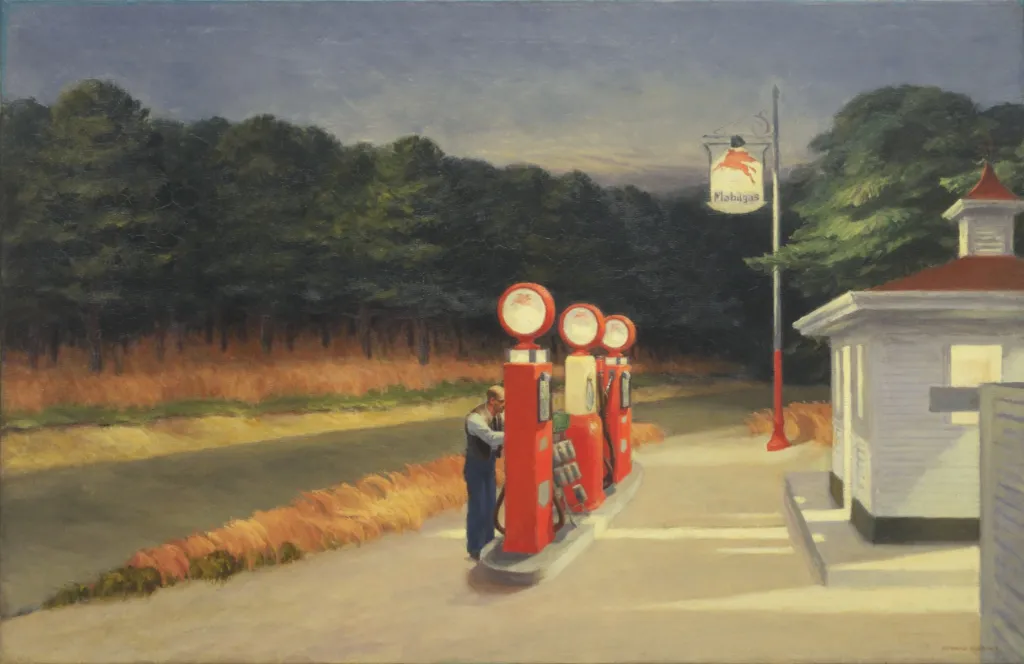
Edward Hopper’s Gas (1940) is an oil on canvas painting showing a gas station at dusk on a quiet highway: a lone attendant stands by pumps under bright lights, with a car parked nearby and dark trees in the background. Hopper uses clean lines and flat colors, with cool greens and blues for the evening sky and warm yellows from the station lights. The angled view creates a sense of depth and isolation, drawing attention to the empty road and the figure's solitude.
Artistic and Social Context
Painted in 1940 from Hopper’s New York studio, Gas draws from roadside scenes observed during car trips, fitting his interest in American architecture and light contrasts seen in works like Nighthawks. It captures the early days of U.S. entry into World War II and lingering Great Depression effects, with the gas station as a symbol of modern travel and economic recovery. Held in the Museum of Modern Art since 1942, it's part of Hopper's "American Scene" style. As American culture, Gas represents the rise of the automobile age and suburban sprawl, influencing roadside art, film like No Country for Old Men, and ads for diners and motels, becoming a go-to image for mid-century isolation and the open road's quiet pull.
Interpretation and Meaning
Gas highlights everyday loneliness: the station's glow against the fading light suggests a fragile outpost of human activity in vast nature, with the attendant's distant pose showing quiet routine and unspoken tension. The empty highway adds to themes of transience and separation, where light exposes vulnerability rather than warmth. It shows Hopper's focus—light as mood-setter, space as emotional distance—and stands as a snapshot of American endurance amid change.
Size
The original painting measures 84.5 × 101.9 cm (33 1/4 × 40 1/8 inches).