La Danse (The Dance)
by Henri Matisse
Description
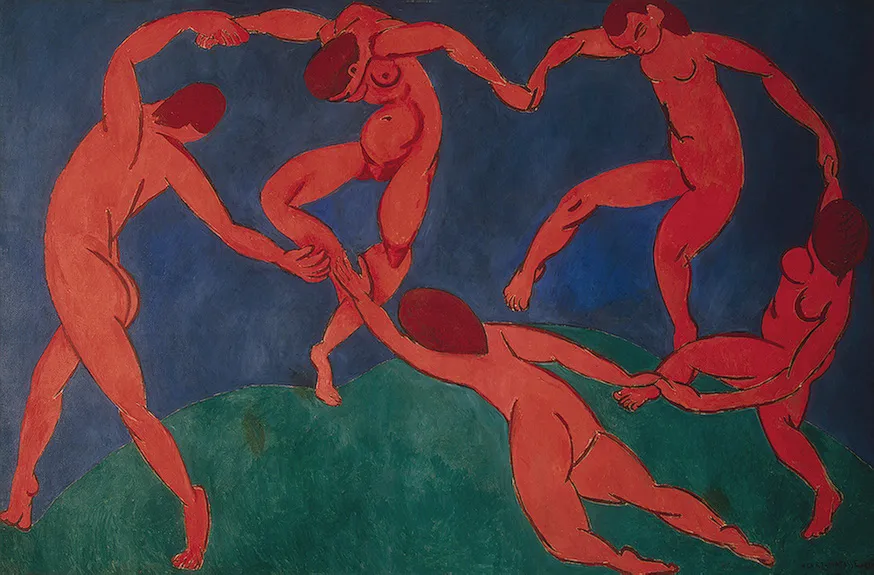
Henri Matisse’s La Danse (The Dance, 1910) is a large oil on canvas painting depicting five nude figures dancing in a circular formation against a vivid backdrop of deep red earth and bright sky blue. The stylized, flowing figures capture rhythmic movement and communal joy through simplified forms and curving outlines. The composition radiates primal energy, presenting dance as a celebration of vitality and unity.
Artistic and Social Context
Painted in 1910 for Russian collector Sergei Shchukin, La Danse represents Fauvism at its most exuberant, utilizing bold color and flattened forms to evoke emotional and spiritual resonance. Part of a larger commission for Shchukin’s Moscow mansion, the piece demonstrates Matisse’s interest in primitive art, folk traditions, and the expressive power of pure color. The Dance is widely considered a turning point in early modern art, often shown alongside Le Music for its symbolism and dynamism.
Interpretation and Meaning
La Danse celebrates harmony, energy, and communal ecstasy through its circular composition and vibrant palette. The raw, energetic movement of the figures transforms dance into a metaphor for life’s cycles, creative joy, and human connection. The work embodies the spirit of modernism—color as emotion, form as life-force—and stands as an icon of 20th-century artistic innovation.
Size
The original painting measures 260 × 391 cm (102 3/8 × 154 inches).