Luxe, calme et volupté (Luxury, Calm, and Pleasure)
by Henri Matisse
Description
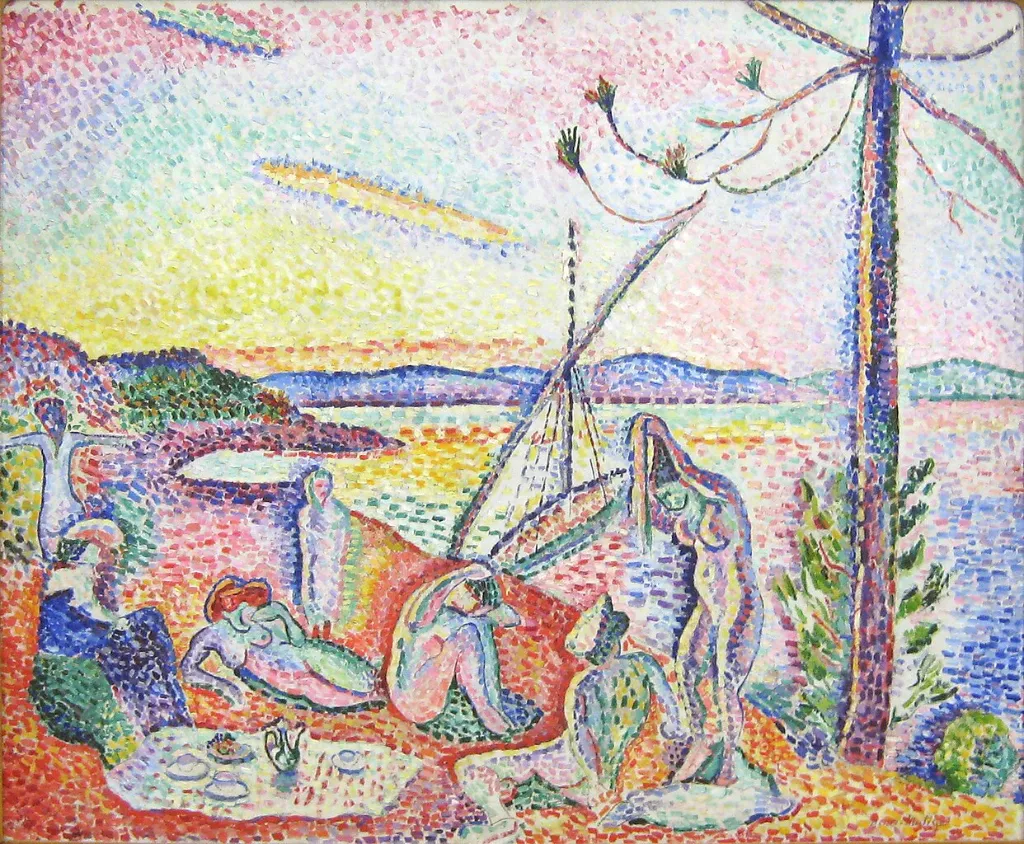
Henri Matisse’s Luxe, calme et volupté (Luxury, Calm, and Pleasure, 1904) is an oil on canvas painting that presents an idyllic, sunlit seaside landscape dotted with six nude or lightly draped figures relaxing amidst colorful fields and water, while a sailboat glides in the background. The scene glimmers with luminous pastel hues—purples, oranges, greens, pinks—rendered using a Divisionist technique of small, mosaic-like brushstrokes. Decorative, swirling patterns animate the forms and emphasize the fantasy of leisure, comfort, and sensual harmony.
Artistic and Social Context
Painted during a transformative summer in St. Tropez, Luxe, calme et volupté is widely regarded as the foundational work of Fauvism, bridging Neo-Impressionist technique and Matisse’s revolutionary approach to color and subject. The painting was created after Matisse’s exposure to Paul Signac and Henri-Edmond Cross, whose Divisionism inspired Matisse’s use of separated, high-pitched color in dashes and dots. The title, drawn from Charles Baudelaire’s poem "Invitation to a Voyage," references a poetic vision of paradise, shaping the painting’s mood of escapist tranquility and transformation of nature.
Interpretation and Meaning
Luxe, calme et volupté distills an ideal of pictorial and emotional pleasure, where the landscape is less a real place than a dreamlike refuge. The interplay of color and light encourages a sense of purity, serenity, and balance, as articulated by Matisse’s lifelong artistic goal. The leisure of the bathers, the inviting landscape, and the simplified, almost abstracted forms embody a search for harmony, both aesthetic and spiritual, in modern art.
Size
The original painting measures 98.5 x 118.5 cm (38.8 x 46.7 inches)