Les montagnes à Collioure (Mountains at Collioure)
by André Derain
Description
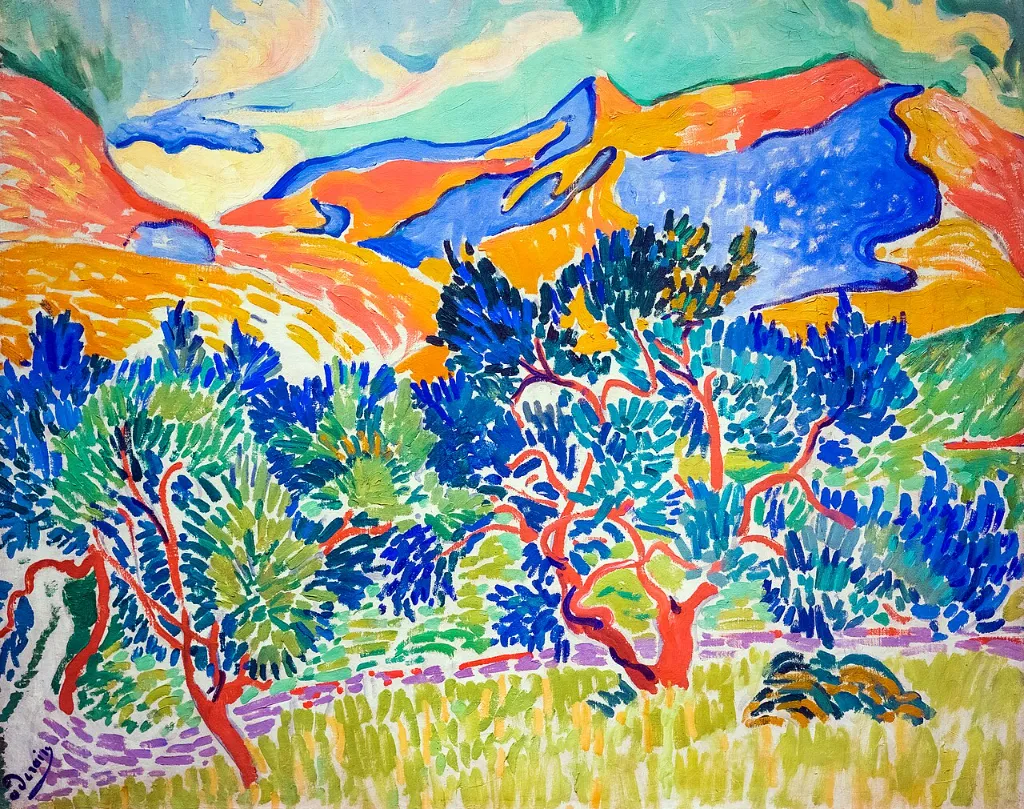
André Derain’s Les montagnes à Collioure (Mountains at Collioure, 1905) is an oil on canvas landscape featuring vibrant, twisting trees set before undulating mountains and a dynamic sky. With expressive, bold brushstrokes and pure color, the painting showcases deep blues, intense oranges and yellows, and sharply outlined red branches. The background mountains consist of broad, flat shapes in contrasting hues under swirling jade and turquoise clouds. The foreground is energized by bursts of dense green and blue foliage, echoing the wild beauty of the Mediterranean countryside.
Artistic and Social Context
Painted in the summer of 1905 at Collioure—where Derain worked closely with Henri Matisse—this painting is a quintessential example of Fauvism. During this period, Derain and Matisse experimented with color liberated from mere description, applying pure pigments directly from the tube to capture Mediterranean light. Their imaginative use of color and rapid brushwork broke with Impressionist realism and embraced abstraction, with Derain drawing inspiration from both Van Gogh's energetic paint handling and Gauguin’s flat decorative forms. “Les montagnes à Collioure” helped establish Fauvism’s radical approach to landscape and its emphasis on emotional expression through color.
Interpretation and Meaning
Les montagnes à Collioure celebrates the sensation of southern French nature through visual rhythm and color harmony. The painting transforms topography and vegetation into lyrical patterns, flattening perspective and intensifying hues to evoke the heat and vitality of the landscape. The exuberant reds and blues of the trees and mountains suggest an ecstatic encounter with nature, while the simplified forms and dynamic composition elevate the landscape into an exploration of feeling and artistic freedom.
Size
The original painting measures 81.3 × 100.3 cm (32 × 39.5 inches).