La Dernière Cène (The Last Supper)
by André Derain
Description
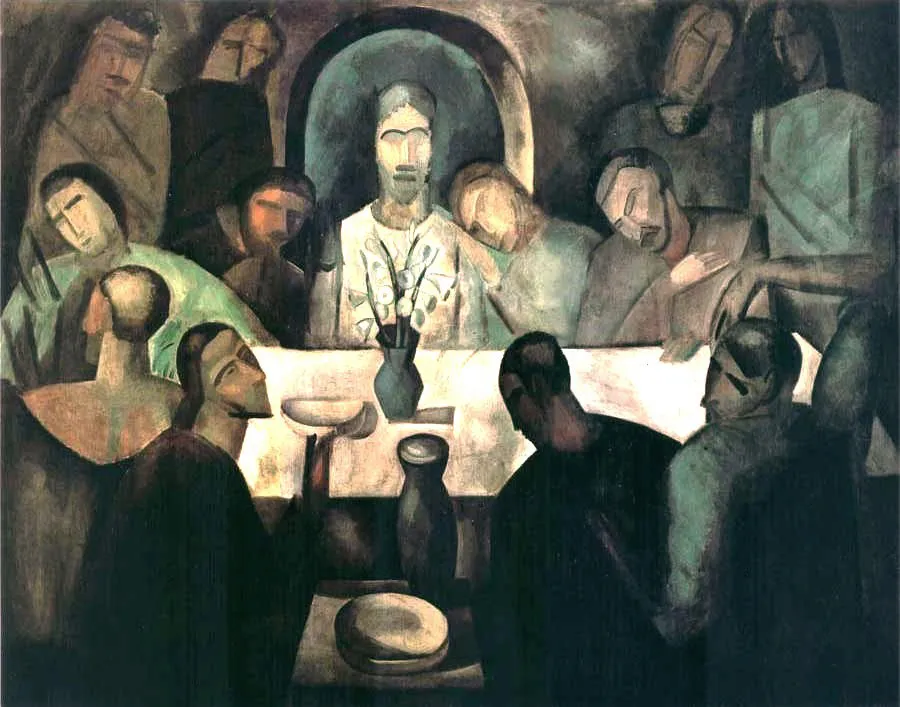
André Derain’s La Dernière Cène (The Last Supper, 1911) is a monumental oil on canvas painting that reinterprets the iconic biblical scene of Jesus’s final meal with his disciples. Derain employs a Cubist-inspired approach, arranging the figures around a white-clothed table in simplified, geometric forms. The central figure, representing Jesus, is bathed in lighter hues and surrounded by somber, angular disciples; the palette is muted, and the composition is infused with tension, introspection, and stylized abstraction. The effect recalls both early Christian iconography and modernist innovation.
Artistic and Social Context
Painted in 1911, this work exemplifies Derain’s transitional phase from Fauvism to classicism and Cubism, reflecting his study of Old Master traditions and modernist experimentation with form. At this time, Derain was engaged in dialogues with Picasso and Braque, absorbing the geometric formalities of Cubism while also infusing spiritual and historical references. Exhibited at the Art Institute of Chicago, La Dernière Cène marks his interest in religious and philosophical themes, echoing the contemporary European search for order and meaning amidst rapid social change and artistic revolutions.
Interpretation and Meaning
La Dernière Cène presents the Last Supper as a meditation on sacrifice, communion, and unity, using angular, abstracted figures to suggest the complexities of faith and human connection. The subdued colors and stylized faces evoke solemnity, mystery, and a break from naturalism, transforming the familiar subject into a site of spiritual inquiry. Derain’s reinterpretation invites reflection on the tension between tradition and modernity, ritual and abstraction.
Size
The original painting measures 227.3 × 288.3 cm (89 1/2 × 113 1/2 inches).