Le Cirque (The Circus) Mourlot 512
by Marc Chagall
Description
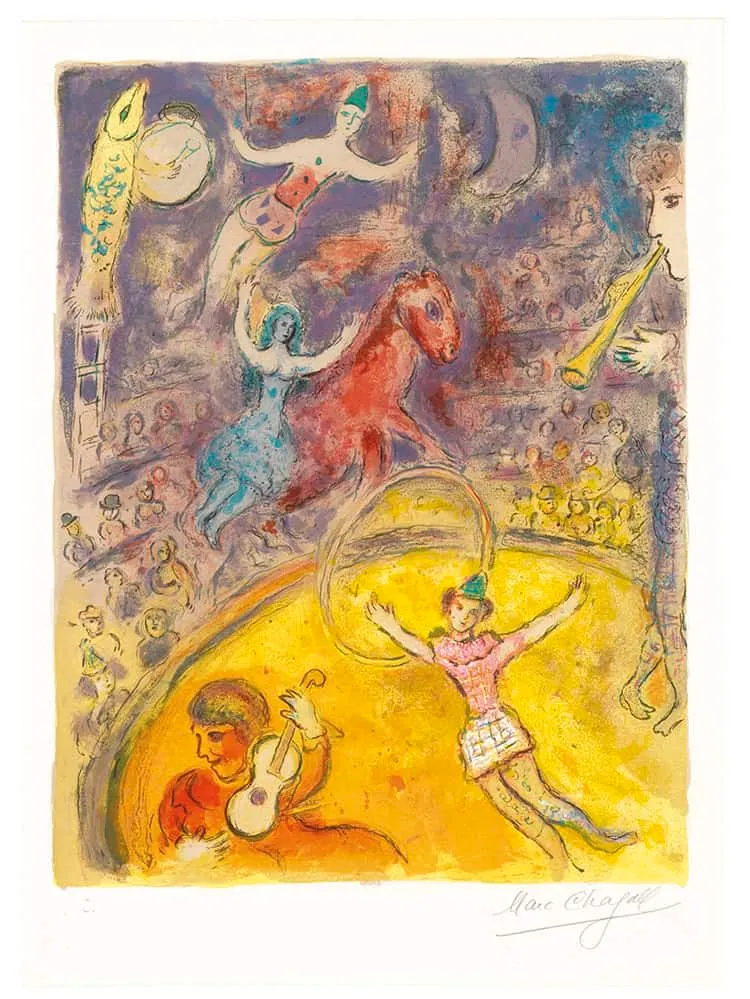
Marc Chagall’s "Le Cirque" (Mourlot 512, 1967) is a luminous color lithograph from the artist’s acclaimed "Le Cirque" suite. This artwork presents a dynamic, dreamlike circus tableau: acrobats, musicians, and fantastical figures float across the composition, defying gravity and traditional perspective. Navy blue, rosy red, and yellow blend into atmospheric clouds at the top, evoking the undulating shadows and electrifying energy beneath the circus tent. Notable features include a levitating hoop performer in the lower right, airborne figures with outstretched arms, and a whimsical musician with a hand drum in the upper left. The entire scene teems with movement and synesthetic references to sound, spectacle, and collective joy.
Artistic and Social Context
Created in 1967 for Chagall’s "Le Cirque" portfolio, Mourlot 512 echoes the artist’s lifelong fascination with the circus as both personal inspiration and metaphor. The suite’s completion was supported by publisher Tériade and reflects Chagall’s love for the circus’s color, exuberance, and childlike wonder. Produced in collaboration with the Atelier Mourlot, the work crystallizes Chagall’s interest in pictorial invention, visual rhythm, and the poetic spirit of performance.
Interpretation and Meaning
Mourlot 512 celebrates the transformative power of art and performance through its suspension of conventional logic—figures levitate, musicians merge with instruments, and time itself seems elastic. The interplay of movement, color, and music invites viewers into a magical space where imagination overrules reality. Chagall communicates the essence of the circus as a metaphor for unity, joy, and creative transcendence.
Size
Sheet size: approx. 51.5 x 37.5 cm (20 1/4 x 14 3/4 in).