Le Cirque (The Circus) Mourlot 511
by Marc Chagall
Description
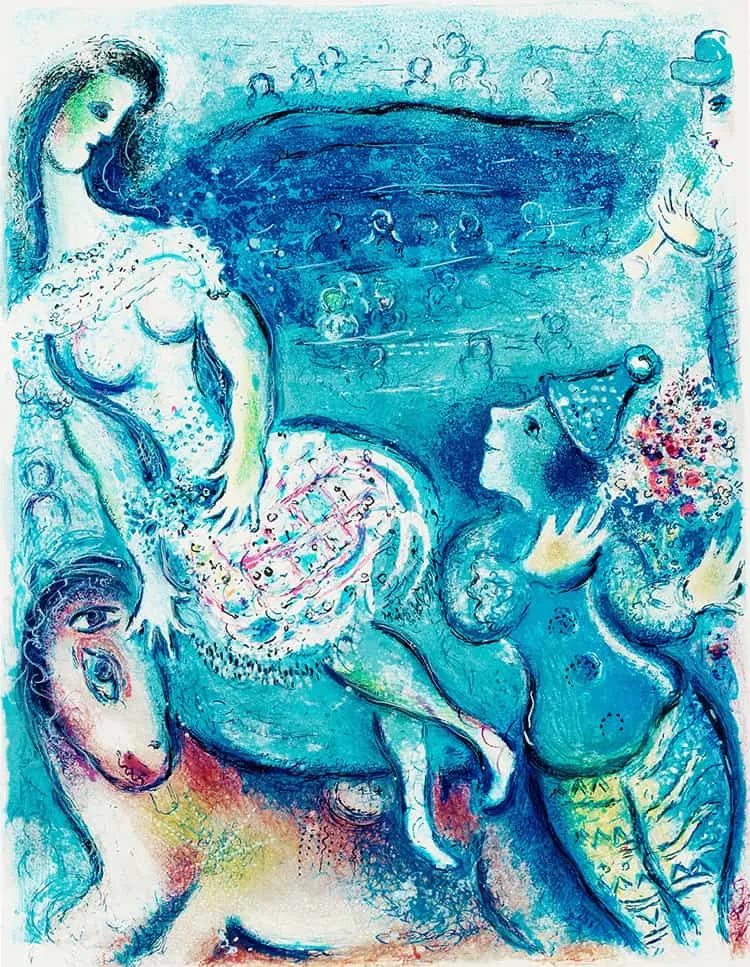
Marc Chagall’s "Le Cirque" (Mourlot 511, 1967) is an original color lithograph from the artist’s famed "Le Cirque" suite. This composition features a poised female circus performer elegantly balanced atop a stylized horse, as a clown in the lower right looks up toward her. The palette of cool aquamarine and blue sets an ethereal mood, while Chagall’s fluid lines and layered composition establish a sense of graceful interior movement and psychological connection. The horse’s head, depicted with two stacked eyes, introduces Chagall’s signature dreamlike distortion, imbuing the scene with a sense of magical possibility.
Artistic and Social Context
Part of the celebrated 38-lithograph "Le Cirque" portfolio published by Tériade in 1967, this work captures the artist’s lifelong enchantment with the circus as both a subject and a metaphor for creativity, balance, and collaboration. Produced with the master printmakers at Mourlot, Mourlot 511 embodies Chagall’s exploration of fantasy, performance, and human connection, inspired by circus acts he frequented and recorded in sketches throughout his life.
Interpretation and Meaning
The mutual gaze of the clown and the equestrian performer, along with their fluid, dancing forms, reflect themes of unity, mutual admiration, and the transformative power of artistry. The horse’s unusual face and the floating, gestural quality of the imagery evoke a liminal space between fantasy and reality, while the scene’s energy underscores Chagall’s belief in the circus as a symbol of communal joy and shared dreams.