Parade au Cirque (Circus Parade) Mourlot 969
by Marc Chagall
Description
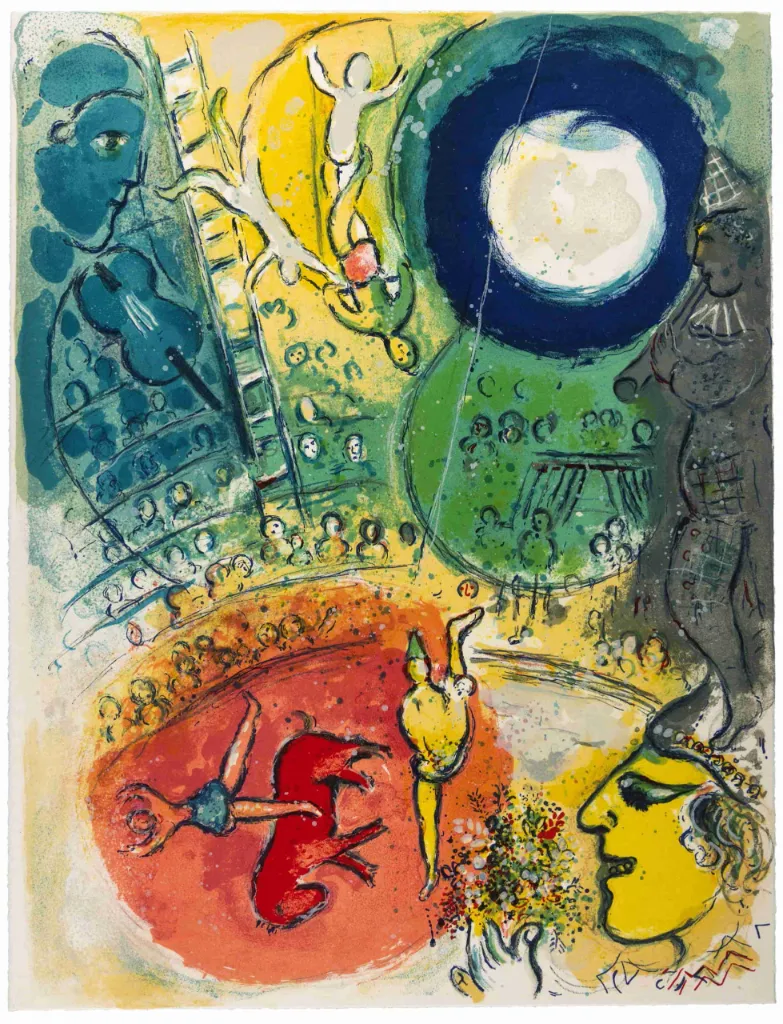
Marc Chagall’s "Parade au Cirque" ("Circus Parade"), 1980, is a vivid color lithograph that brings to life the spectacle and energy of a circus procession. The scene is teeming with motion: acrobats, musicians, figures riding donkeys, and animated trapeze artists parade in a circular composition that draws the audience into the lively performance. Reds, blues, and greens dominate the palette, each distributed across the composition to evoke both the playful chaos and the harmonious rhythm of the circus world.
Artistic and Social Context
Produced in the last years of Chagall’s prolific career, this lithograph celebrates his longstanding fascination with the circus as a metaphor for life’s drama, unpredictability, and joy. Hand-signed and issued in a limited edition of 50, it was published by Maeght Éditeur in Paris. "Parade au Cirque" stands as a testament to Chagall’s late-career exploration of communal art, fantasy, and the exuberant power of performance.
Interpretation and Meaning
With swirling performers and joyous audience members, "Parade au Cirque" expresses Chagall’s themes of unity, transformation, and joyful artistry. The circular movement and central focus on performers invite viewers to become participants in the spectacle, blurring boundaries between observer and artist, dream and reality. It celebrates both the whimsical unpredictability of the circus and the deeper emotions interwoven within collective celebration.
Size
Image: approx. 43 x 33 cm (17 x 13 in).