Le Cirque (The Circus) Mourlot 490
by Marc Chagall
Description
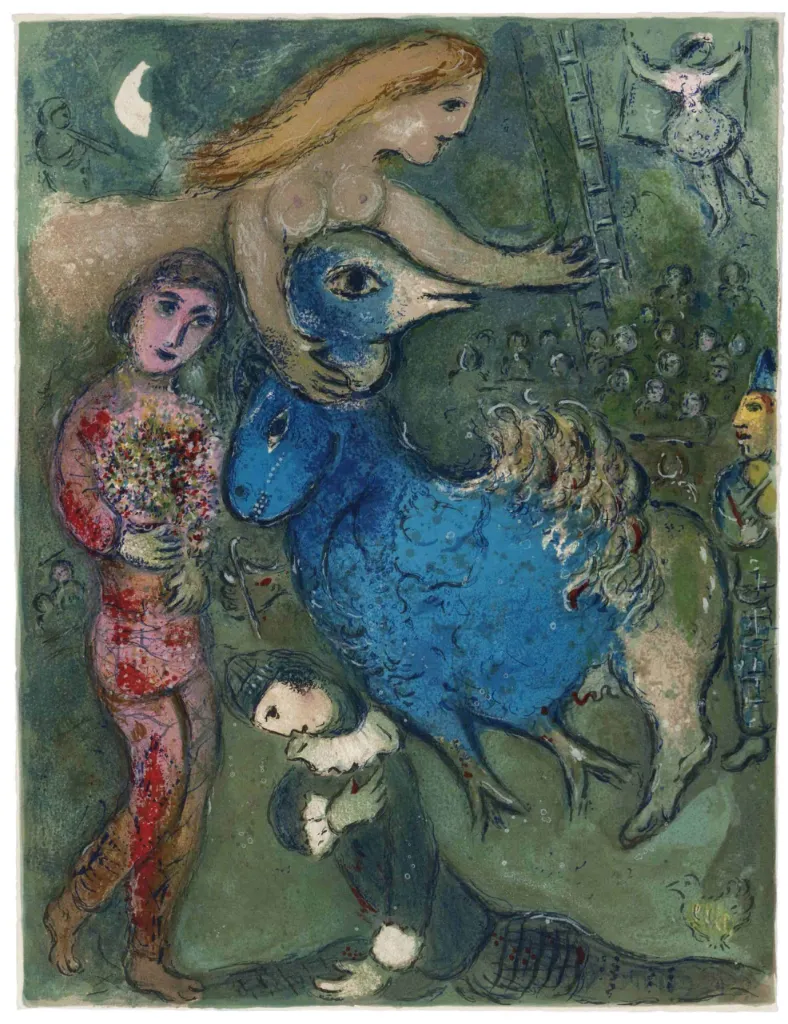
Marc Chagall’s "Le Cirque" (Mourlot 522, 1967) is a vibrant color lithograph from his celebrated Cirque series. The image transports viewers into a surreal, dreamlike circus scene: a central female figure clutching a large bouquet, accompanied by a white bird, anchors the composition, while a fantastical yellow beast-like figure and another exaggerated form with an oversized head animate the foreground. Set against a rich cerulean blue backdrop evoking a circus tent, the interplay of snowy whites and bold yellows creates a dynamic, whimsical energy. This work captures Chagall’s signature blend of fantasy, color, and narrative, embodying the circus’s magic and emotional resonance.
Artistic and Social Context
Created in collaboration with publisher Tériade, this lithograph reflects Chagall’s lifelong enchantment with the circus as a symbol of life’s joy, unpredictability, and poetic depth. Part of a 38-piece Cirque portfolio, the work was completed in the 1960s, reviving a project initially commissioned by Ambroise Vollard in the 1920s but delayed by his death in 1939. Produced during Chagall’s late-career focus on spectacle and performance, "Le Cirque" celebrates artistic freedom and the circus’s childlike wonder, drawing inspiration from performers’ vibrant energy and emotional expressiveness.
Interpretation and Meaning
The swirling figures, fantastical creatures, and vivid colors in "Le Cirque" evoke themes of unity, imagination, and the transformative power of art. The central female figure and accompanying motifs like birds and flowers symbolize the creative spirit and the emotional bonds forged through shared experiences, whether under the circus tent or in life. The dreamlike composition blurs the line between reality and performance, inviting viewers into Chagall’s magical, surreal world where color and movement reign.
Size
Image: approx. 51.5 x 37.5 cm (20 1/4 x 14 3/4 in).