The Kiss
by Auguste Rodin
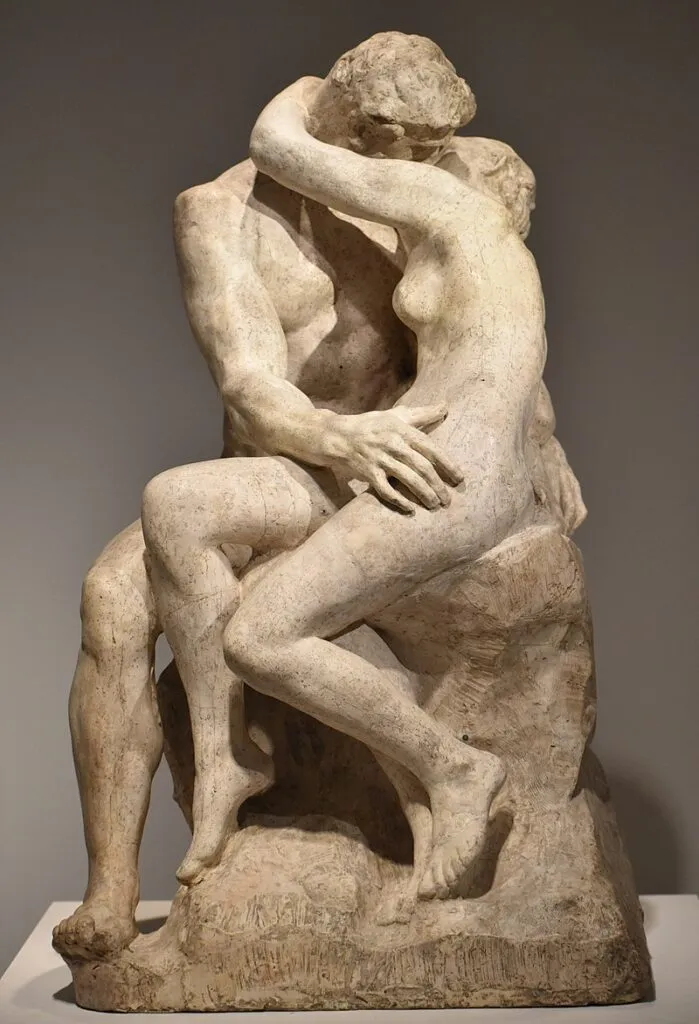
Description
The Kiss (Le Baiser) is an iconic marble sculpture created by Auguste Rodin around 1882, with the finished marble version completed in 1898. It was originally conceived as part of Rodin’s grand project, The Gates of Hell, inspired by Dante’s Inferno. The embracing nude couple, based on the ill-fated lovers Paolo and Francesca da Rimini, was later separated from the tortured figures of the gates and celebrated as a standalone symbol of love and passion.
Significance and Lasting Legacy
- Romantic and Literary Inspiration: The work draws its narrative from Dante’s Inferno (Canto 5), in which Paolo and Francesca, symbolizing forbidden love, are discovered and punished for their affair. Rodin’s sculpture captures the moment of deep yearning before their lips meet, immortalizing the brief ecstasy before tragedy.
- Unprecedented Sensuality: Rodin’s treatment of the intertwined bodies, with soft flesh and gentle tension, was radical in its realism and emotional impact. The Kiss’s eroticism scandalized Victorian viewers but quickly became a public favorite, celebrated for its honest portrayal of human passion.
- Artistic Innovation: The tactility of the marble and the contrast between the polished figures and the rough-hewn base exemplify Rodin’s ability to balance spontaneous feeling with masterful technique, setting new standards for modern sculpture.
- Widespread Influence: Multiple full-scale and smaller versions in marble, bronze, terracotta, and plaster have been reproduced across museums worldwide. Its central examples reside at the Musée Rodin in Paris, the Tate Gallery in London, and Glyptoteket in Copenhagen.
- Symbol of Equality and Ardor: Rodin strove to represent women in his art as equal partners in passion, celebrating mutual desire in an age when such depictions were highly controversial.
Rodin’s The Kiss is universally recognized as one of the greatest sculptures of the modern era for its fusion of literary resonance, emotional intensity, and artistic vision. It continues to resonate as a symbol of love and longing, inviting viewers into moments of romance, vulnerability, and beauty.