Laocoön and His Sons
by Agesander/Athenodoros/Polydorus
Sculptures
Description
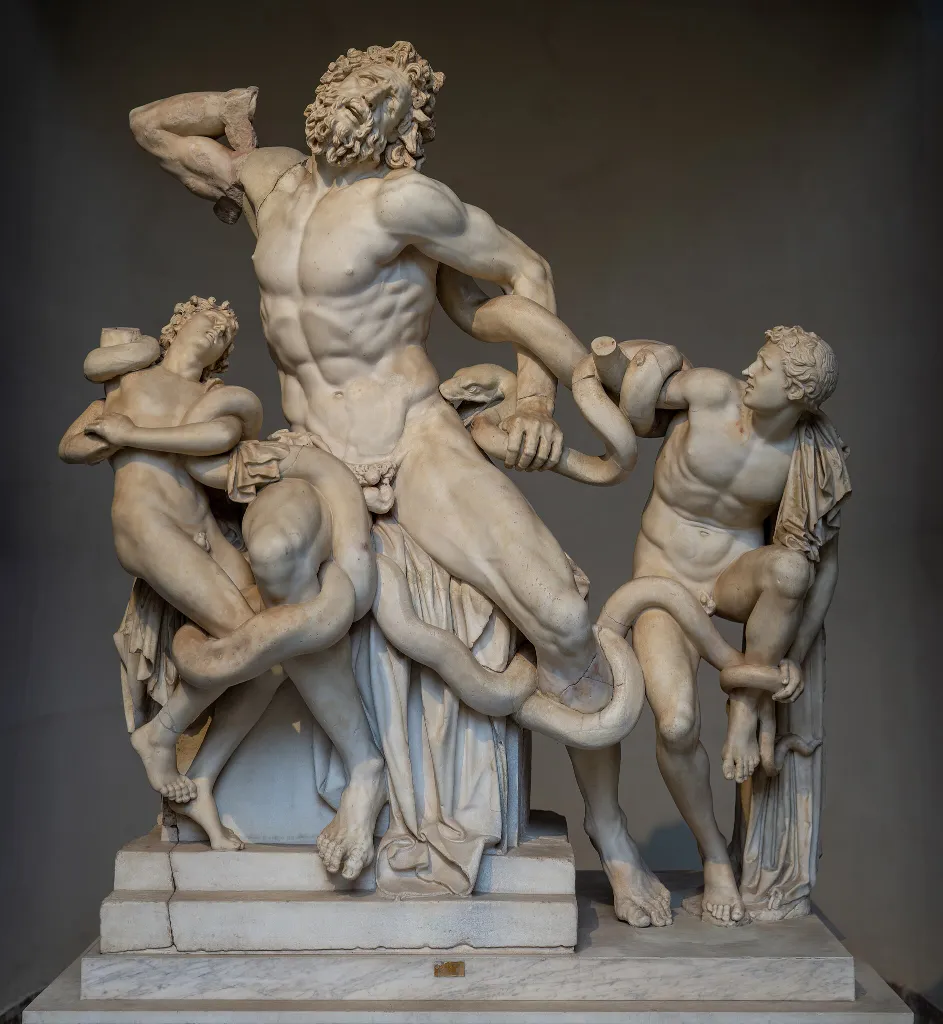
Created around 200 BCE by three Rhodian sculptors—Agesander, Athenodoros, and Polydorus—Laocoön and His Sons is a marble masterpiece of the Hellenistic period. Unearthed in 1506 near Rome, this monumental group now resides in the Vatican Museums, where its dynamic pathos and technical brilliance have influenced centuries of Western art.
Significance and Lasting Legacy
- Epic Narrative and Myth: The statue vividly depicts the tragic fate of the Trojan priest Laocoön and his sons, Antiphantes and Thymbraeus, attacked by sea serpents sent by the gods after he warned his fellow Trojans against accepting the Greeks’ wooden horse. This emotional scene from Virgil’s Aeneid (c. 19 BCE) exemplifies mythological storytelling in marble.
- Unmatched Pathos and Realism: Laocoön and His Sons became an icon of human suffering—Laocoön’s contorted features, bulging muscles, and the desperate figures of his sons communicate agony devoid of redemption. The group’s lifelike movement and dramatic tension set a new standard for expressive sculpture in the ancient world, often termed “Hellenistic baroque”.
- Technical Mastery: Crafted from multiple blocks of Greek Parian marble and measuring over 2 meters tall, the sculpture’s anatomical accuracy, flowing forms, and vivid detailing convey a sense of struggle and the interplay between fate and free will.
- Renaissance and Modern Impact: Its rediscovery caused a sensation in Renaissance Rome, inspiring artists such as Michelangelo and reshaping European standards for naturalism, emotion, and complexity in art. It remains a study subject for artists, historians, and viewers worldwide.
- Symbolism and Reception: Unlike Christian art’s portrayal of redemptive suffering, Laocoön’s agony is absolute and secular—making it a lasting icon of warning, defiance, and the limits of human power against fate and divine intervention.
Laocoön and His Sons is celebrated as the prototypical example of expressive suffering in Western art. Its blend of myth, drama, and technical mastery marks it as a vital reference point for sculpture, narrative art, and the depiction of human emotion through the ages.