Moses
by Michelangelo
Sculptures
Description
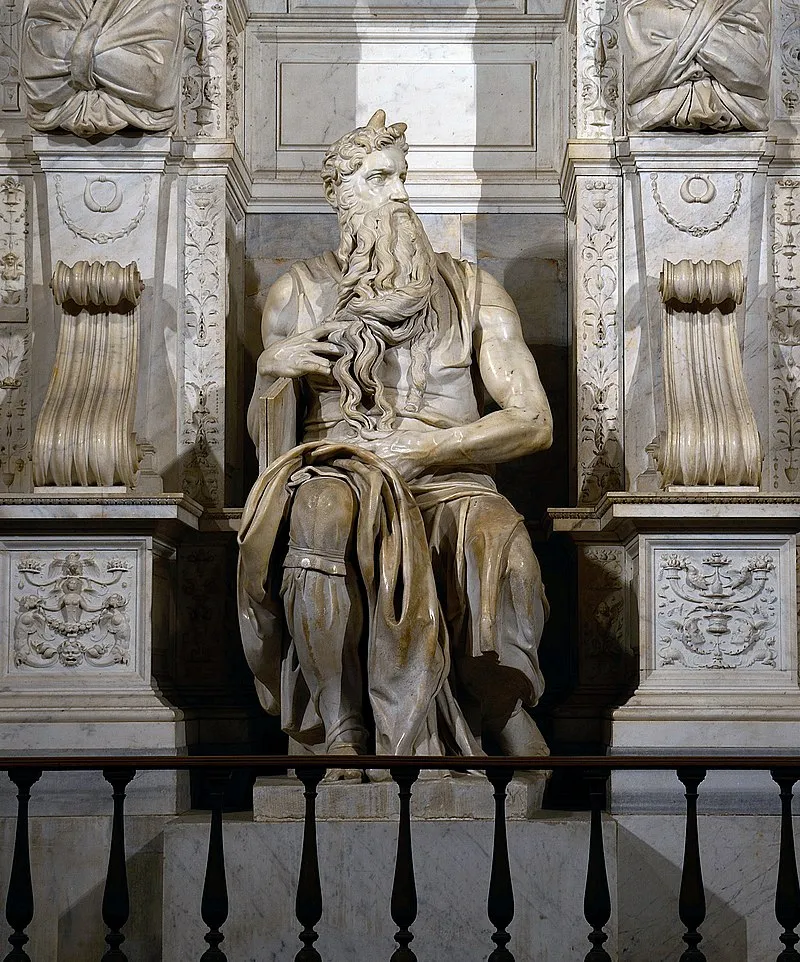
Created by Michelangelo Buonarroti between 1513 and 1515, the monumental marble statue of Moses was commissioned for the tomb of Pope Julius II and is now the centerpiece of that tomb in San Pietro in Vincoli, Rome. This work is celebrated as one of the greatest achievements in Renaissance sculpture, capturing both intense emotion and masterful anatomical detail.
Significance and Lasting Legacy
- Dynamic Expressiveness: Michelangelo portrays Moses at the moment he descends Mount Sinai with the Tablets of the Law, finding his people worshipping the Golden Calf. The prophet’s muscular tension, dramatic posture, and piercing gaze convey both anger and restraint—reflecting high Renaissance ideals and inner conflict.
- Innovative Anatomy and Detail: Carved in Carrara marble, the statue is twice life-size (about 235 cm tall) and famous for its meticulous muscle and vein structure, flowing beard, and lifelike realism. Michelangelo’s mastery brings the prophet to life with a vivid psychological presence—so powerful that legend claims Michelangelo struck his statue, commanding it to speak.
- Symbolic Features: Strikingly, Moses is depicted with horns, derived from a Latin translation of Exodus where “rays of light” were interpreted as horns. This curious feature, combined with the energy of the composition, has fueled centuries of discussion about biblical symbolism and Renaissance interpretations of sacred texts.
- Central Role in Papal Monument: Intended for the ambitious tomb of Pope Julius II, the statue ultimately became the focus of the reduced monument, embodying Michelangelo’s vision of spiritual authority and human struggle. The artist’s own passion and difficulties are reflected in the intense energy of the sculpture.
- Global Influence: The Moses statue is revered by artists, scholars, theologians, and visitors worldwide. Its blend of spirituality, physical force, and emotional depth sets a lasting benchmark for sculpture—the Renaissance ideal of harmonizing body, mind, and soul.
Michelangelo’s Moses is a definitive example of how art can embody spiritual purpose, narrative intensity, and human genius. Its expressive power and innovative craftsmanship secure its place among the most influential and admired sculptures in world history.