Niké of Samothrace (Winged Victory of Samothrace)
by unknown
Description
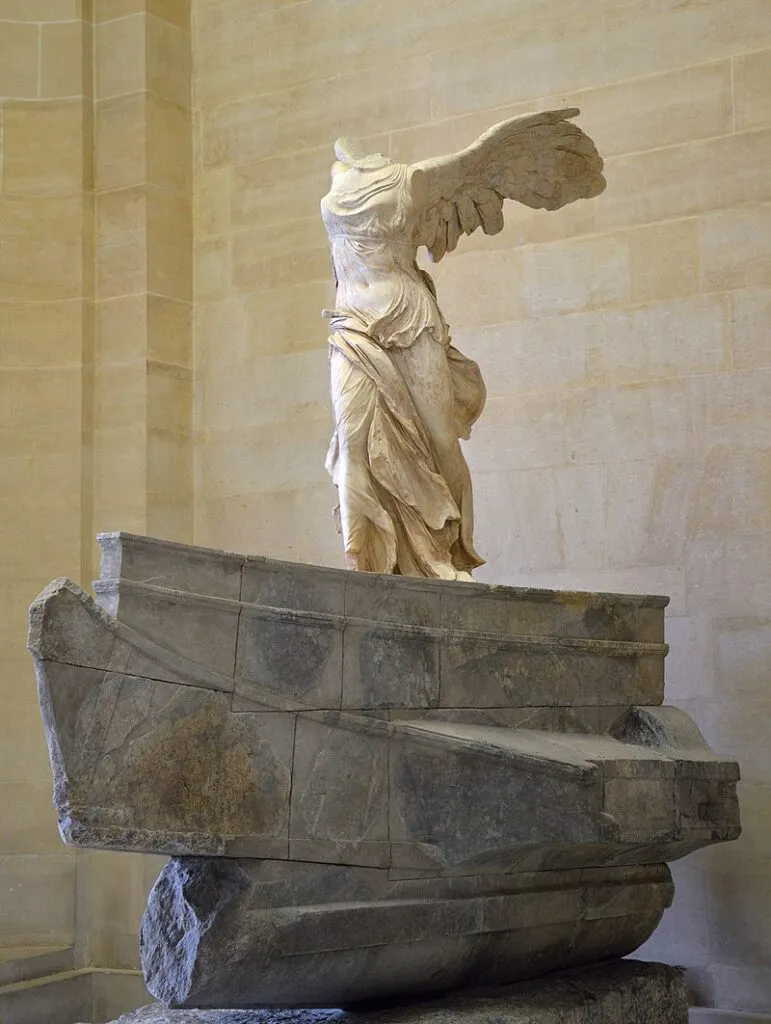
The Nike of Samothrace (Winged Victory of Samothrace) is a Hellenistic masterpiece, created around 190 BCE. Discovered on the Greek island of Samothrace in 1863 by Charles Champoiseau, it is now one of the most celebrated sculptures in the Louvre Museum, Paris. The marble statue stands triumphantly atop a ship’s prow, representing Nike, the Greek goddess of victory, as she descends to crown a victorious fleet.
Significance and Lasting Legacy
The Winged Victory of Samothrace, a marble statue and masterpiece of Greek Hellenistic art, at the Louvre Museum
- Pinnacle of Hellenistic Art: The sculpture’s dynamic composition—figure poised in forward stride, wings outstretched, and drapery rippling as if caught by sea winds—exemplifies the expressive, lifelike qualities of Hellenistic sculpture. Its emotional movement and realism mark a shift from the restraint of Classical Greek statuary to dramatic dynamism.
- Naval Commemoration: Created to celebrate a naval victory, the statue was originally placed in the Sanctuary of the Great Gods on Samothrace, overseeing the Aegean as a symbol of triumph and divine favor. Its base is sculpted as the prow of a ship, rooting the goddess and viewers in the context of ancient maritime worship.
- Mystery of Authorship: While the exact sculptor remains unknown, some sources suggest Pythokritos of Rhodes may have been the artist, based on stylistic links to Rhodian workshops of the era. The anonymity only deepens the work’s aura and universal resonance.
- Fragmentary Beauty: Missing head and arms, the figure’s surviving form has inspired artists and viewers for generations, demonstrating how incomplete art can achieve an even greater, open-ended magnificence.
- Global Influence: Since 1884, the Winged Victory has dominated the Louvre’s Daru staircase, astonishing millions of visitors every year. It stands with the Venus de Milo and Michelangelo’s David as one of the most influential statues in Western art, and a potent symbol of triumph and motion throughout art history.
The Winged Victory of Samothrace represents the pinnacle of artistic achievement, eternalizing a fleeting moment of divine and human success. Its masterful conveying of movement and emotion, mysterious origins, and profound symbolic power earn its place among the world’s greatest and most admired works of sculpture.