The Thinker
by Auguste Rodin
Sculptures
Description
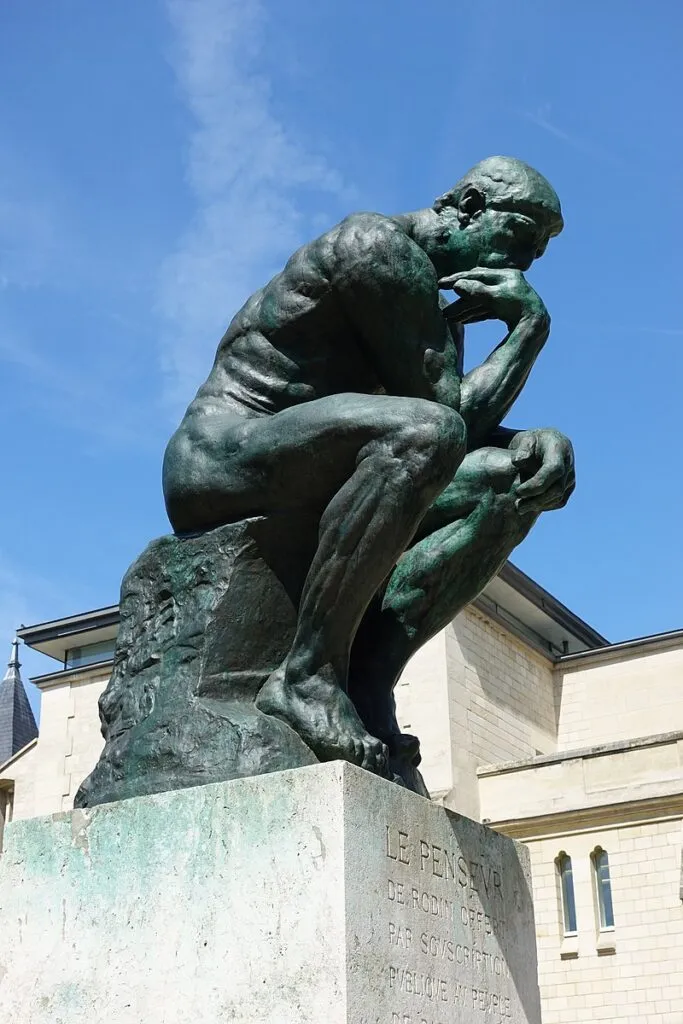
Created by the French sculptor Auguste Rodin (1840–1917), The Thinker (Le Penseur) is one of the most internationally recognized and influential sculptures of all time. Originally conceived in 1880 as part of Rodin’s monumental project, The Gates of Hell, this powerful bronze masterpiece has become a universal symbol of human contemplation and intellectual pursuit.
Significance and Lasting Legacy
- Origins and Evolution: First envisioned as “The Poet” representing Dante Alighieri meditating atop The Gates of Hell, The Thinker soon evolved into an independent sculpture and a public monument (first exhibited in a monumental size in 1904). Rodin’s vision for the piece exceeded its literary inspiration, transforming it into a broader meditation on human existence and creativity.
- Power and Realism: The Thinker is celebrated for its anatomical strength and tension. Rodin captured not just a figure lost in thought, but one who “thinks with every muscle of his arms, back, and legs”—melding intellectual and physical intensity in a single pose. The striking posture—seated, nude, hunched forward, chin on hand—evokes both physical power and profound introspection.
- Symbolic Resonance: Over time, The Thinker transcended its original context and became an emblem of philosophy, creative struggle, and self-reflection. It has come to represent not only poets and artists, but the thoughtful work of all humanity, making it an enduring monument to the importance of intellectual exploration.
- Global Icon: Multiple versions and casts in marble and bronze exist in museums and public spaces worldwide—notably at the Musée Rodin in Paris—testifying to its universal appeal and lasting impact on both art and culture.
- Modern Legacy: Today, images of The Thinker are frequently used to symbolize deep thought in popular culture, academia, and philosophy, cementing its place as one of the most recognized works in art history.
The Thinker by Auguste Rodin remains a must-know sculpture for its groundbreaking realism, emotional force, and the way it bridges art, philosophy, and the modern age. It stands as a timeless invitation to reflect, question, and explore what it means to be human.