Venus de Milo
by Alexandros of Antioch
Sculptures
Description
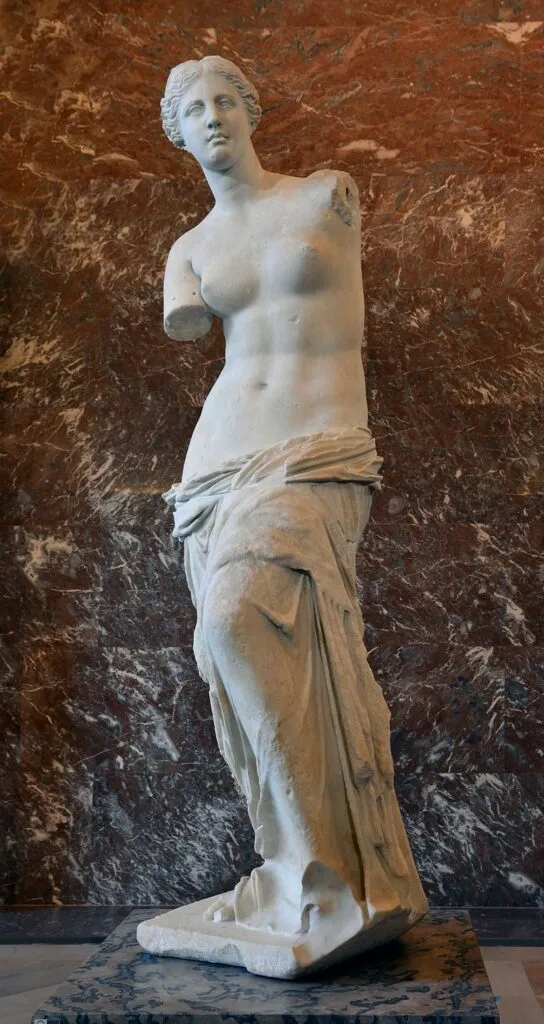
The Venus de Milo (Aphrodite of Melos) is one of the most iconic artistic achievements of ancient Greece. Created between 150 and 100 BCE by the sculptor Alexandros of Antioch, it was discovered in 1820 on the island of Milos and now resides in the Louvre Museum, Paris.
Significance and Lasting Legacy
- Classical Beauty and Form: Carved from Parian marble and standing over 6.5 feet tall, the Venus de Milo reflects the Greek ideal of feminine grace and harmony. Its perfectly balanced anatomy and elegant drapery make it a universal symbol of beauty, blending strength and gentleness in timeless fashion.
- Enigmatic Allure: The sculpture’s missing arms—lost before its arrival at the Louvre—leave her original gesture a mystery, inviting viewers to imagine her story and purpose. This sense of ambiguity enhances her fascination across generations.
- Cultural Icon: From its discovery, Venus de Milo became a symbol not only of Greek art but also of national pride in France. Its influence on art and popular culture continues through countless copies, poems, and songs, inspiring debates about perfection and the passage of time.
- Hellenistic Innovation: Although created in the Hellenistic period, the Venus draws on and advances classical traditions, evident in her lively pose (contrapposto), twisting body, and lifelike anatomy. Alexandros's artistry helped set new standards for realism and sophistication in sculpture.
- Enduring Mystery: While once mistakenly credited to Praxiteles, scholarly consensus attributes the work to Alexandros of Antioch, as suggested by lost inscriptions and stylistic analysis.
The Venus de Milo is celebrated not only for its technical perfection and historical importance, but also for its enduring mystery and power to inspire. Alexandros of Antioch's masterpiece remains one of the greatest representations of beauty, vulnerability, and artistry in world history.