Discobolus
by Myron of Eleutherae
Sculptures
Description
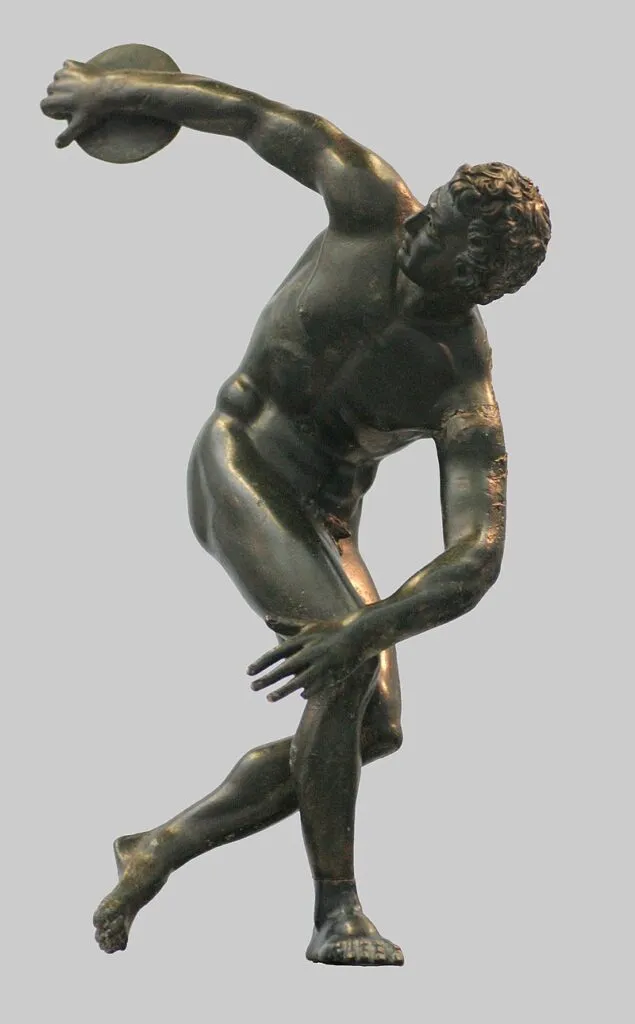
Originally created in bronze by the Greek sculptor Myron around 460–450 BCE, the Discobolus is one of the most celebrated statues from classical antiquity. Although the original is lost, it is known today through impressive Roman marble and bronze copies, which captured and preserved its revolutionary vision of dynamic athleticism.
Significance and Lasting Legacy
- Pioneering Movement and Anatomy: The Discobolus immortalizes the poised moment before a discus throw. Myron’s mastery lies in freezing this dynamic athletic movement with such anatomical accuracy that the statue radiates coiled energy and physical perfection. This snapshot of peak athletic tension was unprecedented in ancient sculpture, setting a new standard for realism and the depiction of the human form.
- Embodiment of Greek Ideals: The Discobolus is more than an athlete—it is a symbol of Greek kalos kagathos, meaning “beauty and virtue together.” The harmonious proportions, rhythm, and balance reflect the values of physical and moral excellence prized in ancient Greece. Although the figure stands in an improbable pose, his calm face expresses inner composure, linking body and mind as equals. This, too, became a hallmark of Greek artistry.
- Roman Admiration and Influence: Roman copies not only preserved this masterpiece for posterity but also turned the Discobolus into a status symbol in villas and public spaces, perpetuating admiration for Greek culture. The statue’s form influenced both art and athletics for centuries, and later inspired artists and institutions worldwide.
- Powerful Symbolism: The Discobolus remains an enduring image of the Olympics and athletic achievement. It represents grace, strength, and the quest for human potential—an ideal cherished from antiquity to modern times.
- Art Historical Importance: The work marked a turning point in Western sculpture, introducing naturalism, advanced contrapposto, and the depiction of a figure in the midst of rapid movement. Its compositional daring, anatomical study, and serene mentality continue to be taught as fundamental achievements in art history.
The Roman Bronze Copy of Myron’s Discobolus secures its place among history’s greatest sculptures for bridging technical innovation, expressive power, and timeless ideals. Its influence reaches from ancient Greece through Rome into the present day, making it an essential and inspiring work for every student and admirer of art.