Little Dancer of Fourteen Years
by Edgar Degas
Sculptures
Description
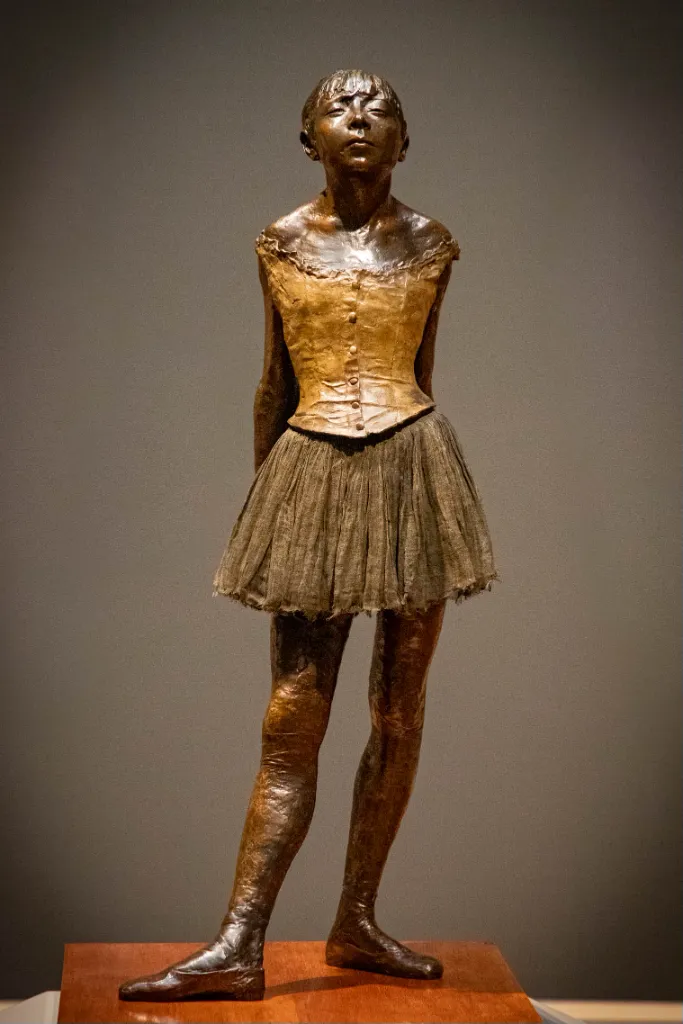
Degas’ “Little Dancer of Fourteen Years,” first exhibited in 1881, remains one of the most iconic and innovative sculptures in art history. Created from wax with real fabric and hair, this remarkable piece presents Marie van Goethem, a young ballet student from the Paris Opera, not as an idealized nymph but as a real, working-class adolescent on the cusp of adulthood.
Significance and Lasting Legacy
- Radical Realism: The sculpture shocked audiences with its lifelike presence and use of real materials (bodice, tutu, slippers, and wig), breaking away from traditional marble or bronze and evoking the actual experience of Parisian ballet students. Her posture—hands clasped behind her back, chin uplifted—captures both the discipline and the dreams of a ballet dancer, as well as the challenges faced by young women in the competitive world of 19th-century Parisian dance.
- Emotional Complexity: Far from a sentimental or graceful pose, the figure brims with tension, strength, and adolescent uncertainty. Degas shows a girl caught between childhood and maturity, evoking both the beauty and the pressures of her world.
- Controversy and Transformation: Critics at the 1881 Impressionist Exhibition found the piece unsettling—some deemed it “ugly” or shocking in its honest realism. Over time, this same radical honesty and empathy became the reason for its acclaim. The “Little Dancer” came to symbolize a new, modern sensitivity in art that focused on ordinary people and psychological depth.
- Technical Innovation: By introducing mixed media into the world of fine sculpture, Degas both challenged and expanded definitions of the art form, paving the way for new artistic expressions in the 20th century.
- Global Icon: Today, bronze versions of the sculpture grace museums worldwide, but the original wax model (and some early casts) remain treasures of major public collections, drawing hundreds of thousands of admirers annually.
“Little Dancer of Fourteen Years” marks a turning point in the history of sculpture. It embodies a shift from heroic or religious subjects to the complex realities faced by ordinary people, especially women. Its frank portrayal of adolescence grapples with dreams and adversity, while its innovative technique forever changed the relationship between art and life