The Pietà
by Michelangelo
Sculptures
Description
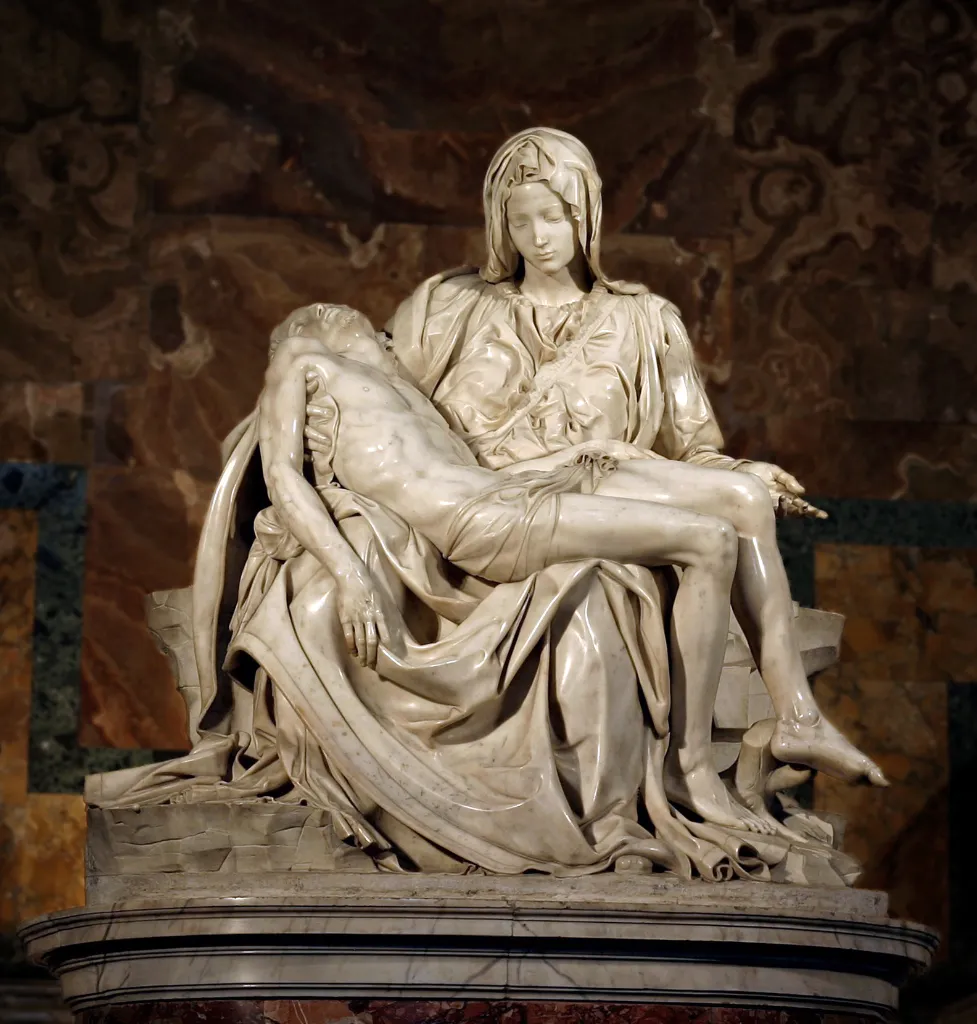
Michelangelo’s Pietà, created between 1498 and 1500, stands as a foundational example of High Renaissance art. Sculpted from a single block of Carrara marble when Michelangelo was only 24 years old, it depicts the Virgin Mary cradling the body of Jesus after the Crucifixion. The term “Pietà” means “pity” or “compassion,” encapsulating the sculpture’s profound emotional and spiritual impact.
Significance and Enduring Influence
- Emotional Depth and Realism: The Pietà’s delicate realism and masterful carving capture immense pathos while achieving a naturalistic portrayal of the human form. It balances Renaissance ideals of classical beauty with a deeply human narrative, inviting contemplation about love, loss, and maternal suffering.
- Technical Mastery: Michelangelo’s unprecedented technical prowess enabled him to transform marble into soft, lifelike flesh, intricate drapery, and expressive faces. The pyramid composition and harmonious proportions are iconic in the history of art.
- Innovative Interpretation: Unlike earlier depictions, Michelangelo’s youthful and serene Mary defies traditional representations, symbolizing her purity and spiritual strength. The sculpture is unique as the only work Michelangelo ever signed, attesting to his pride in this achievement.
- Cultural and Religious Icon: Originally commissioned for a French cardinal’s tomb in St. Peter’s Basilica, the Pietà now resides in a prominent chapel of the basilica in Vatican City. It has inspired countless artists and continues to attract millions of visitors annually, serving as a universal symbol of compassion, devotion, and artistic excellence.
- Legacy in Art: The Pietà launched Michelangelo into the artistic elite of his time and set the standard for emotional expression and technical perfection in Western sculpture. Its influence is seen in both religious and secular art through centuries.
The Pietà bridges the gap between divinity and humanity. Its enduring beauty and powerful symbolism continue to resonate with audiences of all backgrounds, affirming its place as one of the world’s most significant and beloved works of art