Vent (Wind)
by Zao Wou-Ki
Description
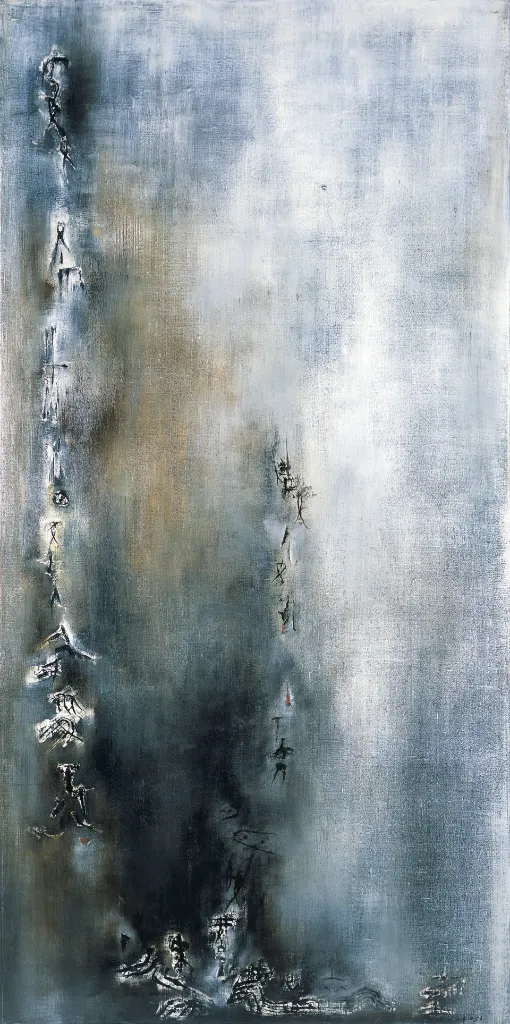
Zao Wou-Ki’s Vent (1954) is a pivotal oil painting where figuration all but disappears, replaced by a cascading stream of invented symbols that evoke the intangible movement of wind. Inspired by Paul Klee, Zao drew upon ancient Chinese characters for their visual power, transforming them into abstract forms that mark his decisive shift toward non-representational painting. The work vibrates with fluid energy and announces his embrace of a world freed from subject matter.
Artistic and Social Context
By the early 1950s, Zao Wou-Ki felt constrained by figuration and sought a new direction. The poetic, symbolic language of Paul Klee offered a path forward, encouraging him to invent his own visual vocabulary. In Vent, the use of abstract signs rooted in Chinese aesthetics connects East Asian tradition with modern European abstraction. Often regarded as his first purely abstract painting, it represents the beginning of Zao’s lifelong exploration of painting as a universal language beyond cultural or literal references.
Interpretation and Meaning
Vent transforms the visual trace of language into a metaphor for the unseen forces of nature. The descending cascade of signs suggests the passage of air and breath, creating a rhythm that mirrors the ephemeral qualities of wind. It embodies Zao’s liberation from narrative subjects, signaling a turn inward toward painting as an expressive space where form and energy, rather than representation, carry meaning.
Size
The original size of Zao Wou-Ki’s Vent is approximately 195 × 97 cm (76 3/4 × 38 1/4 inches).