Introduction
The Hobbit: A Classic in Children’s Literature
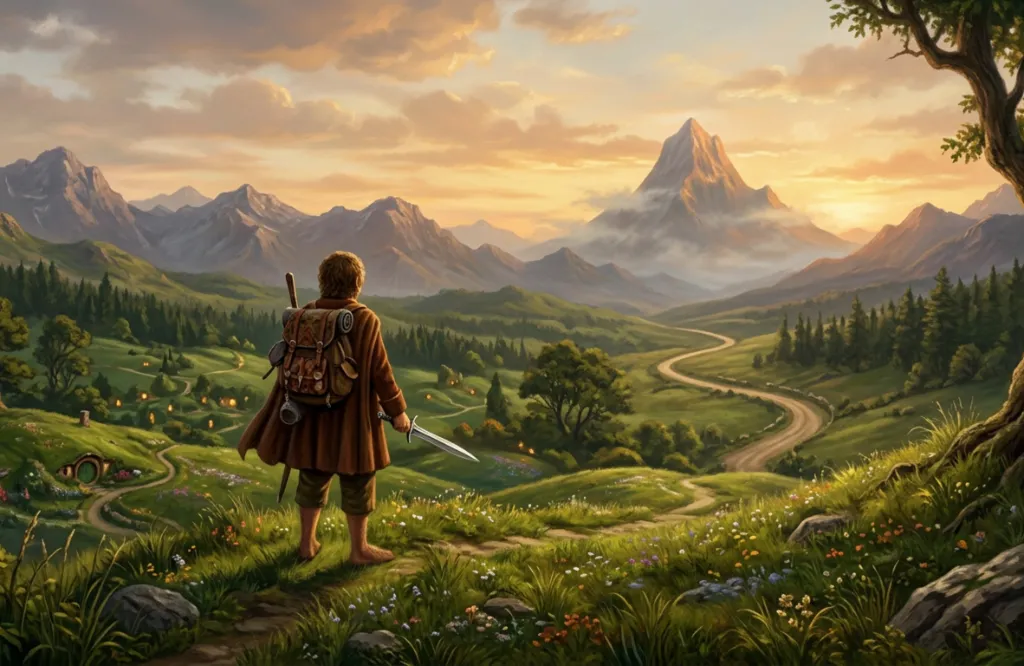
J.R.R. Tolkien’s The Hobbit, first published in 1937, is a beloved fantasy novel celebrated for its enchanting storytelling and richly imaginative prose, standing alongside Tolkien’s later masterpiece, The Lord of the Rings. This adventurous tale follows Bilbo Baggins, a reluctant hobbit, as he embarks on a quest with a group of dwarves and the wizard Gandalf to reclaim treasure from the dragon Smaug. The novel’s 19 chapters are vivid and engaging, ideal for young readers and classroom discussions, both in-person and online. Tolkien’s evocative, immersive language fosters emotional connection, encouraging students to explore themes like bravery, friendship, and personal growth through activities such as character analysis or creative writing. The vivid characters and fantastical Middle-earth setting spark imagination while teaching resilience and courage.
Cultural Importance
The Hobbit holds significant cultural value for American and UK children as a timeless literary classic that bridges both nations’ storytelling traditions. In the UK, the novel is a cultural cornerstone, reflecting Tolkien’s British-inspired mythology and universal themes of heroism and camaraderie, resonating with children exploring identity and adventure. In the US, its themes of courage and self-discovery connect with young readers, complementing studies of narrative craft and emotional intelligence. Its whimsical yet profound tone appeals to both audiences, fostering cross-cultural appreciation through shared values of exploration and transformation. In classrooms across both nations, the novel’s adaptability—used in curricula for reading comprehension, creative writing, and discussions on heroism—solidifies its role as a cultural connector, encouraging children to embrace bravery and curiosity while celebrating Tolkien’s enduring legacy.
Recommended Reading Lists for UK and US Grades
The Hobbit frequently appears on recommended reading lists for primary and secondary school students in both the UK and US, typically for ages 10–14 (UK Years 6–9; US Grades 5–8). It’s valued for fostering literacy, imagination, and discussion of complex themes.
- UK: Featured on BookTrust’s “100 Best Books for Children” (ages 9–11), the National Curriculum’s KS2 and KS3 reading lists (Key Stage 2 and 3, ages 7–14), and school-specific lists like those from the Federation of Children’s Book Groups. It’s also recommended by School Reading List for upper primary and early secondary pupils, emphasizing its role in reading for pleasure and exploring fantasy narratives.
- US: Included in Common Core-aligned curricula for Grades 5–8, Scholastic’s recommended titles for middle-grade readers, and TeachingBooks’ state award lists (e.g., states like California and Texas).
Film Adaptations
The Hobbit has been adapted into several notable films, enhancing its cultural impact:
- 1977 Animated Film: A Rankin/Bass animated adaptation, capturing the novel’s whimsical tone and key adventures, though simplified for younger audiences.
- 2012–2014 Film Trilogy: A live-action trilogy directed by Peter Jackson (The Hobbit: An Unexpected Journey, The Desolation of Smaug, and The Battle of the Five Armies.
Knowledge Builder
Content
Chapter 1: An Unexpected Party
1.1: Chapter 1: An Unexpected Party
Chapter 2: Roast Mutton
2.1: Chapter 2: Roast Mutton
Chapter 3: A Short Rest
3.1: Chapter 3: A Short Rest
Chapter 4: Over Hill and Under Hill
4.1: Chapter 4: Over Hill and Under Hill
Chapter 5: Riddles in the Dark
5.1: Chapter 5: Riddles in the Dark
Chapter 6: Out of the Frying-Pan into the Fire
6.1: Chapter 6: Out of the Frying-Pan into the Fire
Chapter 7: Queer Lodgings
7.1: Chapter 7: Queer Lodgings
Chapter 8: Flies and Spiders
8.1: Chapter 8: Flies and Spiders
Chapter 9: Barrels Out of Bond
9.1: Chapter 9: Barrels Out of Bond
Chapter 10: A Warm Welcome
10.1: Chapter 10: A Warm Welcome
Chapter 11: On the Doorstep
11.1: Chapter 11: On the Doorstep
Chapter 12: Inside Information
12.1: Chapter 12: Inside Information
Chapter 13: Not at Home
13.1: Chapter 13: Not at Home
Chapter 14: Fire and Water
14.1: Chapter 14: Fire and Water
Chapter 15: The Gathering of the Clouds
15.1: Chapter 15: The Gathering of the Clouds
Chapter 16: A Thief in the Night
16.1: Chapter 16: A Thief in the Night
Chapter 17: The Clouds Burst
17.1: Chapter 17: The Clouds Burst
Chapter 18: The Return Journey
18.1: Chapter 18: The Return Journey
Chapter 19: The Last Stage
19.1: Chapter 19: The Last Stage
Instructor
Ming Aretê
Ming Aretê not only offers high‑quality Book Quizzes, but also curates beautifully designed cultural courses that guide students through both Chinese and international cultures, broadening horizons beyond reading alone.
Ming Aretê Presents Book Quizzes help students retain key knowledge about main characters, plot events, and important details from each chapter, while effectively testing and strengthening overall reading comprehension so that “reading a book” becomes truly “understanding a book.”