Introduction
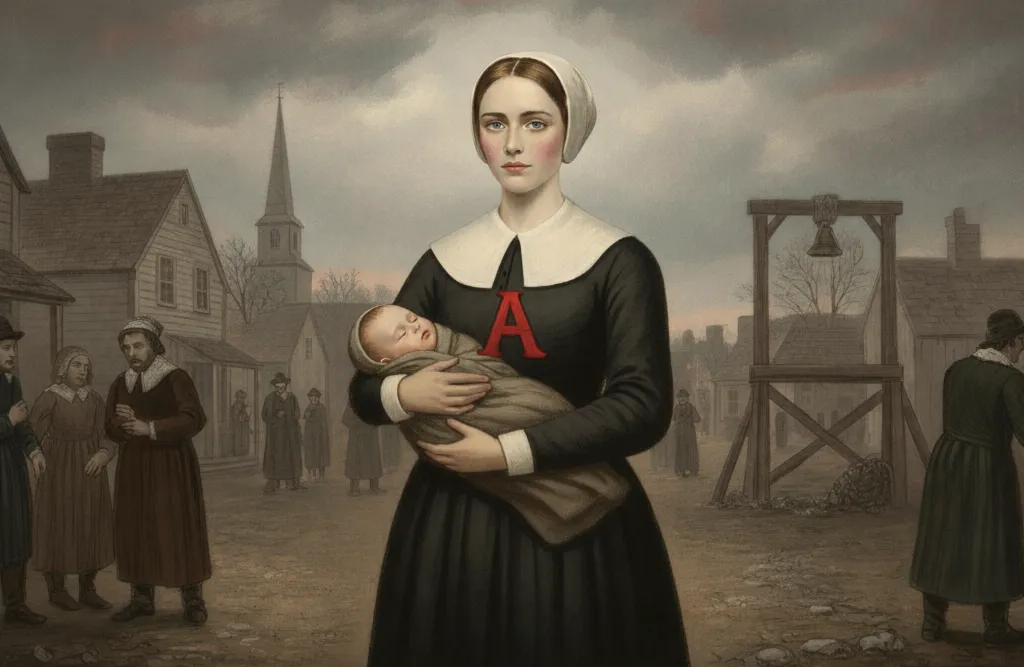
Nathaniel Hawthorne’s The Scarlet Letter, first published in 1850, is a foundational American novel that blends historical fiction with intense psychological and moral drama. Set in 17th‑century Puritan Boston, it tells the story of Hester Prynne, a woman condemned for adultery and forced to wear a scarlet letter “A” on her chest as a permanent mark of shame. Refusing to reveal the identity of her lover, Hester raises her daughter Pearl alone and endures harsh public humiliation while quietly building a life of strength, charity, and dignity at the edge of the community. Around her, the tormented minister Arthur Dimmesdale and the vengeful physician Roger Chillingworth embody hidden guilt and obsessive revenge, turning the narrative into a powerful exploration of sin, punishment, hypocrisy, and the possibility of redemption. Through rich symbolism, gothic atmosphere, and subtle psychological insight, the novel continues to challenge readers’ ideas about justice, morality, and individual conscience.
Cultural Importance
The Scarlet Letter occupies a central place in American culture as one of the earliest major works to question rigid moral codes and collective judgment. Its portrayal of public shaming, gender double standards, and the conflict between personal truth and social expectations has kept it relevant to modern debates about morality, reputation, and punishment. The image of the scarlet “A” has entered everyday language as a symbol of stigma and social branding, used to describe how people are marked by scandal in politics, media, and online life. The novel’s emphasis on inner conscience over external authority has influenced generations of writers, educators, and public thinkers, who treat it as a key text for understanding American ideas of individualism and moral responsibility.
Recommended Reading Lists for UK and US Grades
- **UK: **The Scarlet Letter is recommended for older secondary and A‑level students (about ages 15–18). It is often used to study 19th‑century American literature, Romanticism, Puritan society, and key symbols such as the scarlet “A” and the scaffold.
- US: In the United States, The Scarlet Letter is a core high‑school American Literature text, usually taught in Grades 10–12 (most often Grade 11). Schools use it to teach symbolism, allegory, and narrative voice, and to prompt discussions about justice, public shaming, guilt, and individual conscience.
Film and Media Adaptations
Notable screen and media adaptations include:
- The Scarlet Letter (1926 silent film), directed by Victor Sjöström and starring Lillian Gish as Hester Prynne.
- The Scarlet Letter (1934 film), an early sound adaptation that brought the story to wider cinema audiences.
- The Scarlet Letter (1979 PBS miniseries), a multi‑episode television version noted for its relative faithfulness to the novel.
- The Scarlet Letter (1995 film), directed by Roland Joffé and starring Demi Moore, Gary Oldman, and Robert Duvall, a loose and controversial adaptation that significantly changes the plot and ending.
By following Hester Prynne’s journey from branded sinner to a figure of quiet strength and moral independence, The Scarlet Letter suggests that true worth is not defined by public condemnation, but by the resilience of conscience, compassion, and the courage to live honestly under judgment.
Knowledge Builder
Content
Chapter I: The Prison-Door
1.1: Chapter I: The Prison-Door
Chapter II: The Market-Place
2.1: Chapter II: The Market-Place
Chapter III: The Recognition
3.1: Chapter III: The Recognition
Chapter IV: The Interview
4.1: Chapter IV: The Interview
Chapter V: Hester at Her Needle
5.1: Chapter V: Hester at Her Needle
Chapter VI: Pearl
6.1: Chapter VI: Pearl
Chapter VII: The Governor’s Hall
7.1: Chapter VII: The Governor’s Hall
Chapter VIII: The Elf-Child and the Minister
8.1: Chapter VIII: The Elf-Child and the Minister
Chapter IX: The Leech
9.1: Chapter IX: The Leech
Chapter X: The Leech and His Patient
10.1: Chapter X: The Leech and His Patient
Chapter XI: The Interior of a Heart
11.1: Chapter XI: The Interior of a Heart
Chapter XII: The Minister’s Vigil
12.1: Chapter XII: The Minister’s Vigil
Chapter XIII: Another View of Hester
13.1: Chapter XIII: Another View of Hester
Chapter XIV: Hester and the Physician
14.1: Chapter XIV: Hester and the Physician
Chapter XV: Hester and Pearl
15.1: Chapter XV: Hester and Pearl
Chapter XVI: A Forest Walk
16.1: Chapter XVI: A Forest Walk
Chapter XVII: The Pastor and His Parishioner
17.1: Chapter XVII: The Pastor and His Parishioner
Chapter XVIII: A Flood of Sunshine
18.1: Chapter XVIII: A Flood of Sunshine
Chapter XIX: The Child at the Brook-Side
19.1: Chapter XIX: The Child at the Brook-Side
Chapter XX: The Minister in a Maze
20.1: Chapter XX: The Minister in a Maze
Chapter XXI: The New England Holiday
21.1: Chapter XXI: The New England Holiday
Chapter XXII: The Procession
22.1: Chapter XXII: The Procession
Chapter XXIII: The Revelation of the Scarlet Letter
23.1: Chapter XXIII: The Revelation of the Scarlet Letter
Chapter XXIV: Conclusion
24.1: Chapter XXIV: Conclusion
Instructor

Ming Aretê
Ming Aretê not only offers high‑quality Book Quizzes, but also curates beautifully designed cultural courses that guide students through both Chinese and international cultures, broadening horizons beyond reading alone.
Ming Aretê Presents Book Quizzes help students retain key knowledge about main characters, plot events, and important details from each chapter, while effectively testing and strengthening overall reading comprehension so that “reading a book” becomes truly “understanding a book.”