Introduction
The Phantom Tollbooth: A Modern Alice in Wonderland
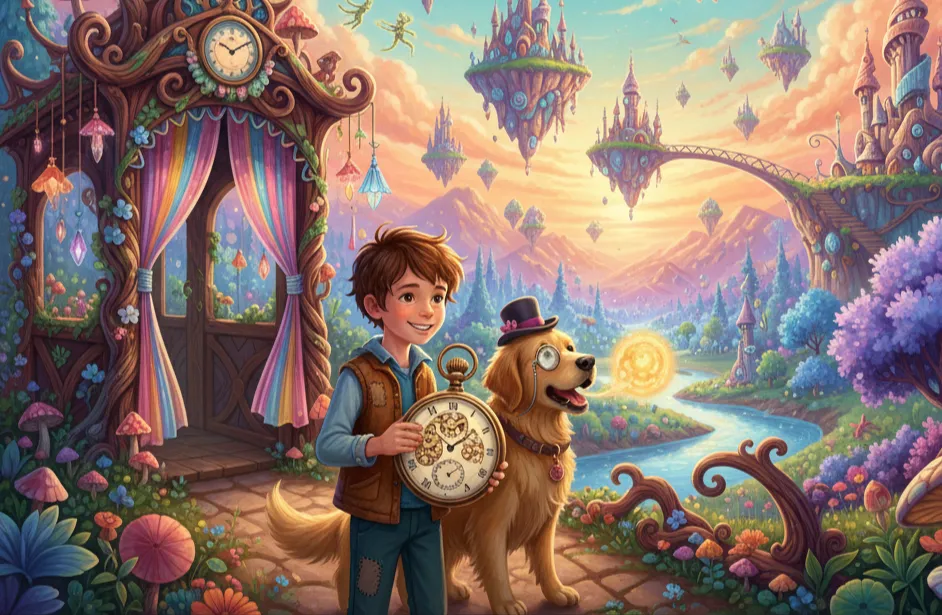
The Phantom Tollbooth (1961), the debut children’s novel by Norton Juster (with lively illustrations by Jules Feiffer), transports readers from banal boredom into a dazzling world of imagination. The protagonist, a boy named Milo who finds everything dull, receives — out of nowhere — a strange tollbooth which he assembles and drives through (in his toy car), only to find himself in the surreal “Lands Beyond.” Alongside his loyal watchdog Tock and the absurd yet endearing Humbug, Milo embarks on a whimsical quest to rescue the exiled princesses Rhyme and Reason from the floating Castle in the Air. Through pun-filled adventures — from the Island of Conclusions to the cities of words and numbers — Milo gradually discovers that learning, curiosity, and thinking deeply about language and logic can turn a dull life into a vibrant adventure.
Cultural Importance The Phantom Tollbooth has long been celebrated as a classic of children’s literature — not merely for its playful fantasy, but for its clever use of language, satire, and its deeper advocacy for a love of learning. By turning idioms, puns, and abstract ideas into tangible characters and landscapes, the book invites readers — especially children — to see words, numbers, and logic as living, magical elements. It challenges the notion that schoolwork and learning are boring, instead celebrating curiosity, creativity, and intellectual play. Over decades, it has influenced countless readers’ perceptions of learning and imagination, and remains a touchstone for what children’s literature can do when it respects young minds’ capacity for wonder, wit, and reflection.
In addition, The Phantom Tollbooth has left a profound mark on many writers and artists who later became major cultural figures. Michael Chabon, the Pulitzer Prize–winning novelist and one of the most celebrated voices in contemporary American literature, has spoken openly about the book’s deep impact on him. Chabon recalls first encountering an excerpt of the novel in the Childcraft series and being instantly captivated; when he finally obtained the full book, it became one of his most cherished childhood reads. Chabon’s admiration underscores the novel’s enduring power not only within children’s literature but across the broader landscape of American literary creativity.
Recommended Reading Lists for UK and US Grades
- UK: Commonly recommended for Key Stage 2 (ages ~9–12), especially for readers transitioning from simpler chapter books to more imaginative, concept-rich fantasy.
- US: Often suggested for grades 4–6 (middle-grade), providing a readable but thought-provoking bridge between early children’s fiction and more complex juvenile novels.
Film and Media Adaptations
- Film: The 1970 feature-film adaptation blends live action with animation, capturing Milo’s transition from a colorless real world into the whimsical Lands Beyond. While differing in tone from the novel, the film preserves many of its linguistic jokes and imaginative settings, introducing the story to a new generation of young viewers.
- Other: The book has been adapted into an opera and stage plays; multiple illustrated and annotated editions have appeared over time, sustaining its appeal across generations.
Knowledge Builder
Content
Chapter 1: Milo
1.1: Chapter 1: Milo
Chapter 2: Beyond Expectations
2.1: Chapter 2: Beyond Expectations
Chapter 3: Welcome to Dictionopolis
3.1: Chapter 3: Welcome to Dictionopolis
Chapter 4: Confusion in the Market Place
4.1: Chapter 4: Confusion in the Market Place
Chapter 5: Short Shrift
5.1: Chapter 5: Short Shrift
Chapter 6: Faintly Macabre’s Story
6.1: Chapter 6: Faintly Macabre’s Story
Chapter 7: The Royal Banquet
7.1: Chapter 7: The Royal Banquet
Chapter 8: The Humbug Volunteers
8.1: Chapter 8: The Humbug Volunteers
Chapter 9: It’s All in How You Look at Things
9.1: Chapter 9: It’s All in How You Look at Things
Chapter 10: A Colorful Symphony
10.1: Chapter 10: A Colorful Symphony
Chapter 11: Dischord and Dynne
11.1: Chapter 11: Dischord and Dynne
Chapter 12: The Silent Valley
12.1: Chapter 12: The Silent Valley
Chapter 13: Unfortunate Conclusions
13.1: Chapter 13: Unfortunate Conclusions
Chapter 14: The Dodecahedron Leads the Way
14.1: Chapter 14: The Dodecahedron Leads the Way
Chapter 15: This Way to Infinity
15.1: Chapter 15: This Way to Infinity
Chapter 16: A Very Dirty Bird
16.1: Chapter 16: A Very Dirty Bird
Chapter 17: Unwelcoming Committee
17.1: Chapter 17: Unwelcoming Committee
Chapter 18: Castle in the Air
18.1: Chapter 18: Castle in the Air
Chapter 19: The Return of Rhyme and Reason
19.1: Chapter 19: The Return of Rhyme and Reason
Chapter 20: Good-by and Hello
20.1: Chapter 20: Good-by and Hello
Instructor
Ming Aretê
Ming Aretê Presents Book Quizzes will help you retain knowledge about main characters, events, and details from each chapter while test reading comprehension effectively.