Introduction
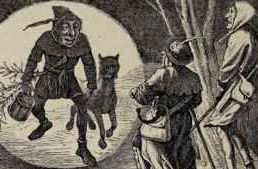
“The Man in the Moon”: First printed in the 1780s, this whimsical nursery rhyme follows a space traveler who lands in the wrong place and eats odd food. Its lilting rhythm and engaging tale delight children while boosting language and imaginative skills. J.R.R. Tolkien wrote poems inspired by the "Man in the Moon" tradition, including “The Man in the Moon Stayed Up Too Late,” which he incorporated into The Lord of the Rings. The 2012 extended edition of The Hobbit: An Unexpected Journey features a song about ‘The Man in the Moon,’ inspired by Tolkien’s poem, sung by a dwarf character. Additionally, William Shakespeare’s famous play A Midsummer Night’s Dream includes a character that represents the Man in the Moon.
Knowledge Builder
Content
In this video, we explore the historical context, words, and meaning of the nursery rhyme "The Man in the Moon."
1.1: The Man in the Moon
1.2: Quiz
1.3: The Man in the Moon: Read Along
1.4: The Man in the Moon: Sequence Arrangement
Instructor

Michael Pratt PhD, JD
Michael Pratt has been an assiduous reader since childhood, ever since he bought a used copy of Oscar Williams’ anthology Immortal Poems of the English Language on a whim. That early curiosity sparked a lifelong love of literature and learning.
He earned his Ph.D. in Spanish literature at the University of Wisconsin-Madison, and later a law degree from Temple University. He has worked in multiple professional capacities, including as a professor in the Department of Romance Languages at the University of North Carolina at Chapel Hill and as a trial attorney in Philadelphia, bringing both intellectual rigor and practical insight to his work.
Michael’s passions are wide-ranging: from history and literature, ancient and modern, to science and natural history, with a particular fascination for the lives of birds. He has studied and lived abroad for extended periods in Spain, Mexico, Vietnam, and China, experiences that have deeply shaped his worldview and understanding of culture.
Through his English translations and recitations of Chinese classical poetry, Michael helps Ming Aretê users connect with the timeless beauty and emotional depth of Chinese poetry, allowing them to appreciate its cultural richness beyond language.
- Juris Doctor (JD) – Temple University Beasley School of Law, 2004
- Ph.D – Spanish – University of Wisconsin- Madison,1994
- Master of Arts – Spanish – University of Wisconsin-Madison, 1989